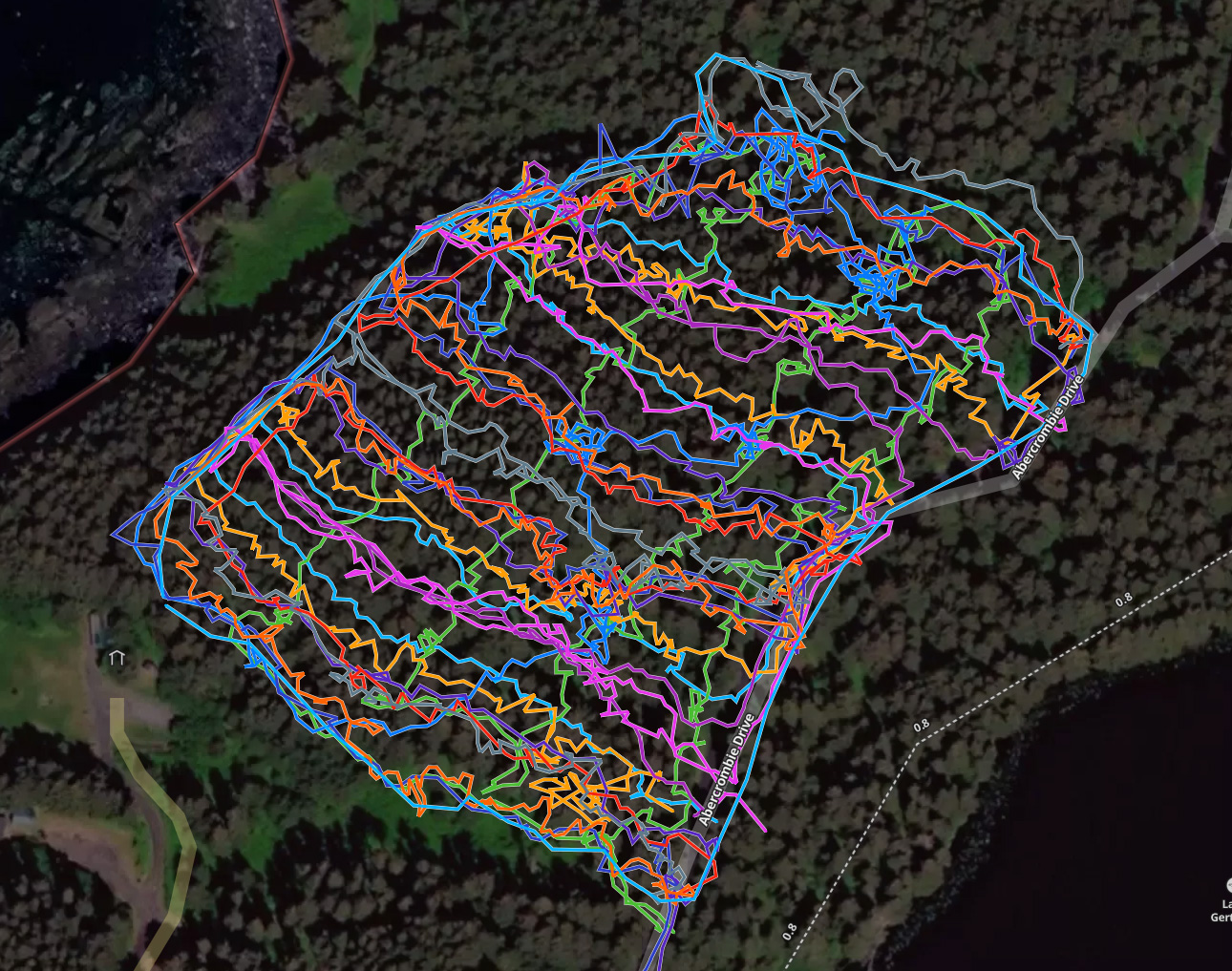
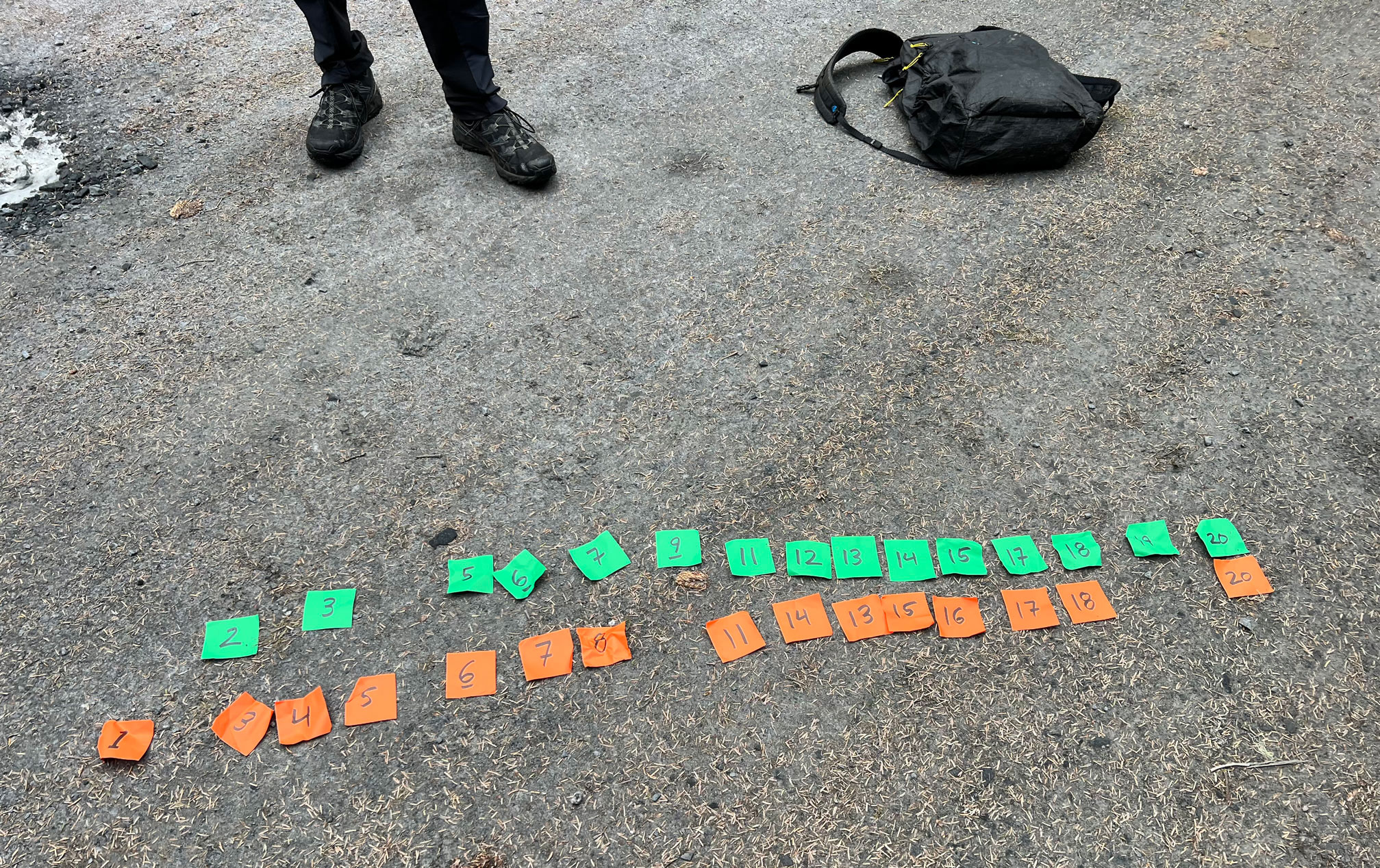
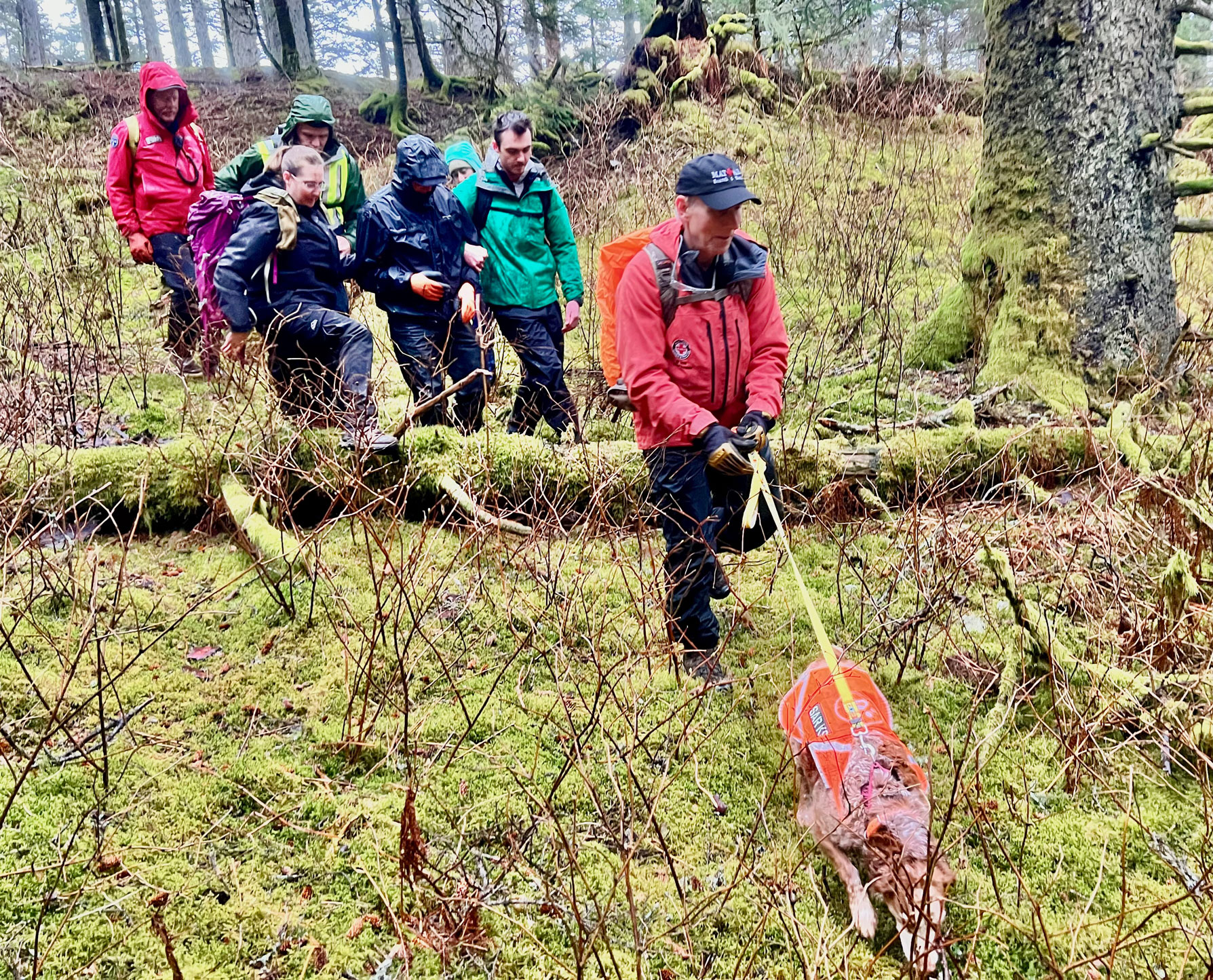
For KISAR’s November general membership training, Philip set a course of clues in Fort Abercrombie State Park between Lake Gertrude and the wildflower meadow. The search area was bounded on the east side by Abercrombie Drive and by trails on the other 3 sides. 40 ‘clues’ were deposited in the search area in the form of squares of orange and green paper with numbers written on them. After a briefing, 7 KISAR members formed a critical separation line-abreast team and methodically swept the search area in 6 passes, recovering 30 of the 40 clues (75%), which was slightly higher than the goal of 65%. The purpose of the training was to become familiar with factors influencing the probability of detection of clues and to practice doing a critical separation sweep search with group situational awareness and good communication.
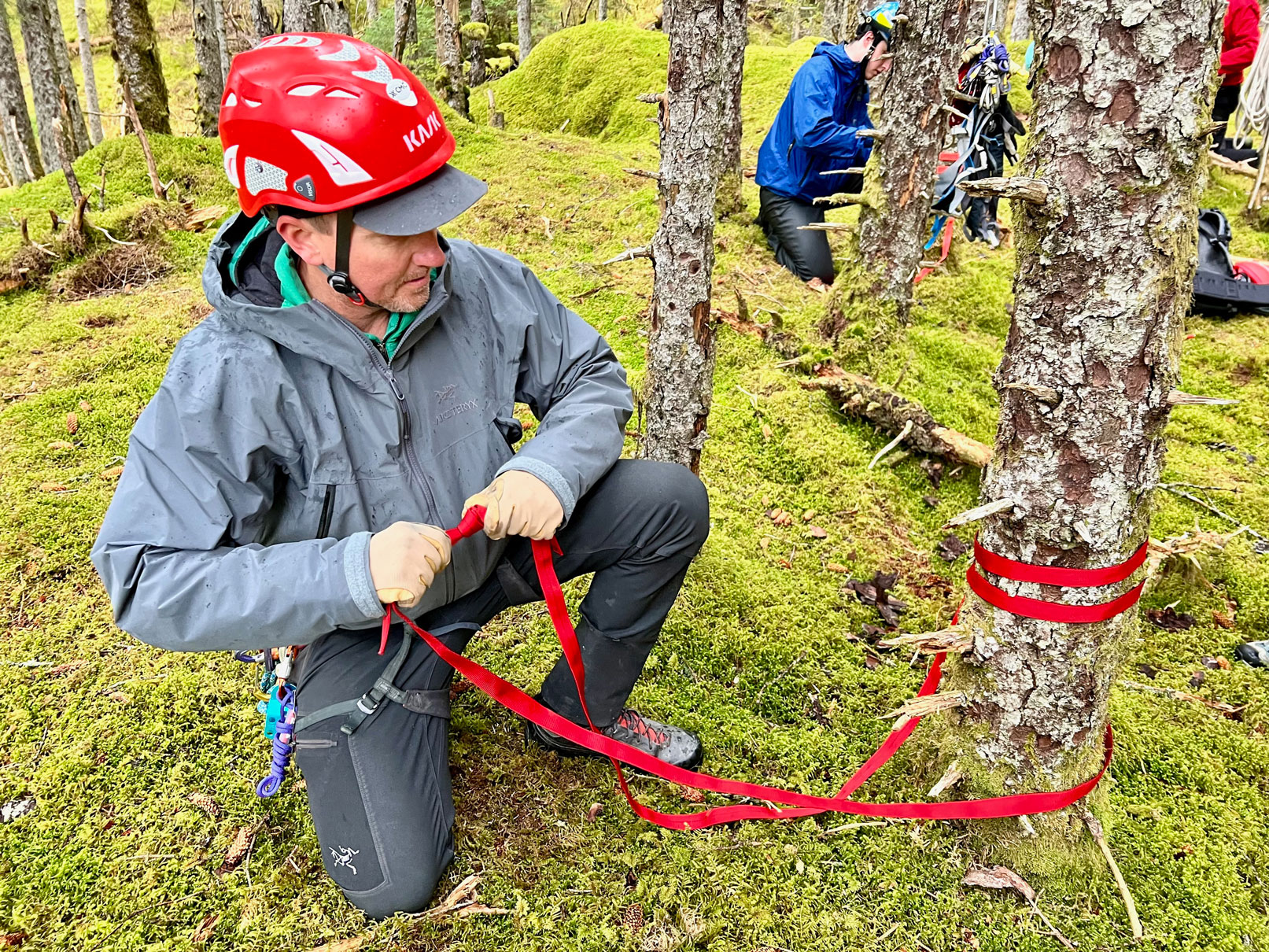
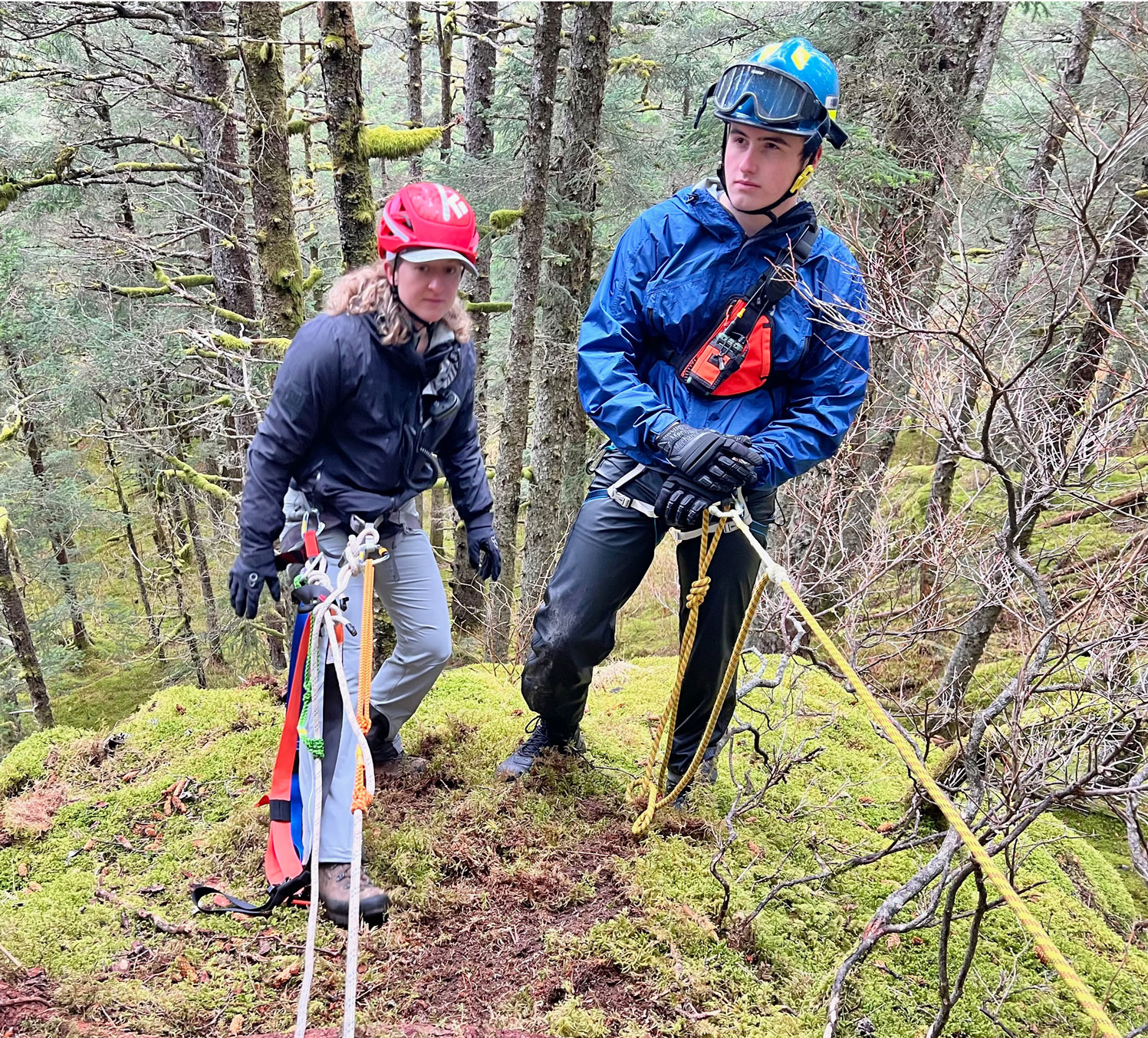
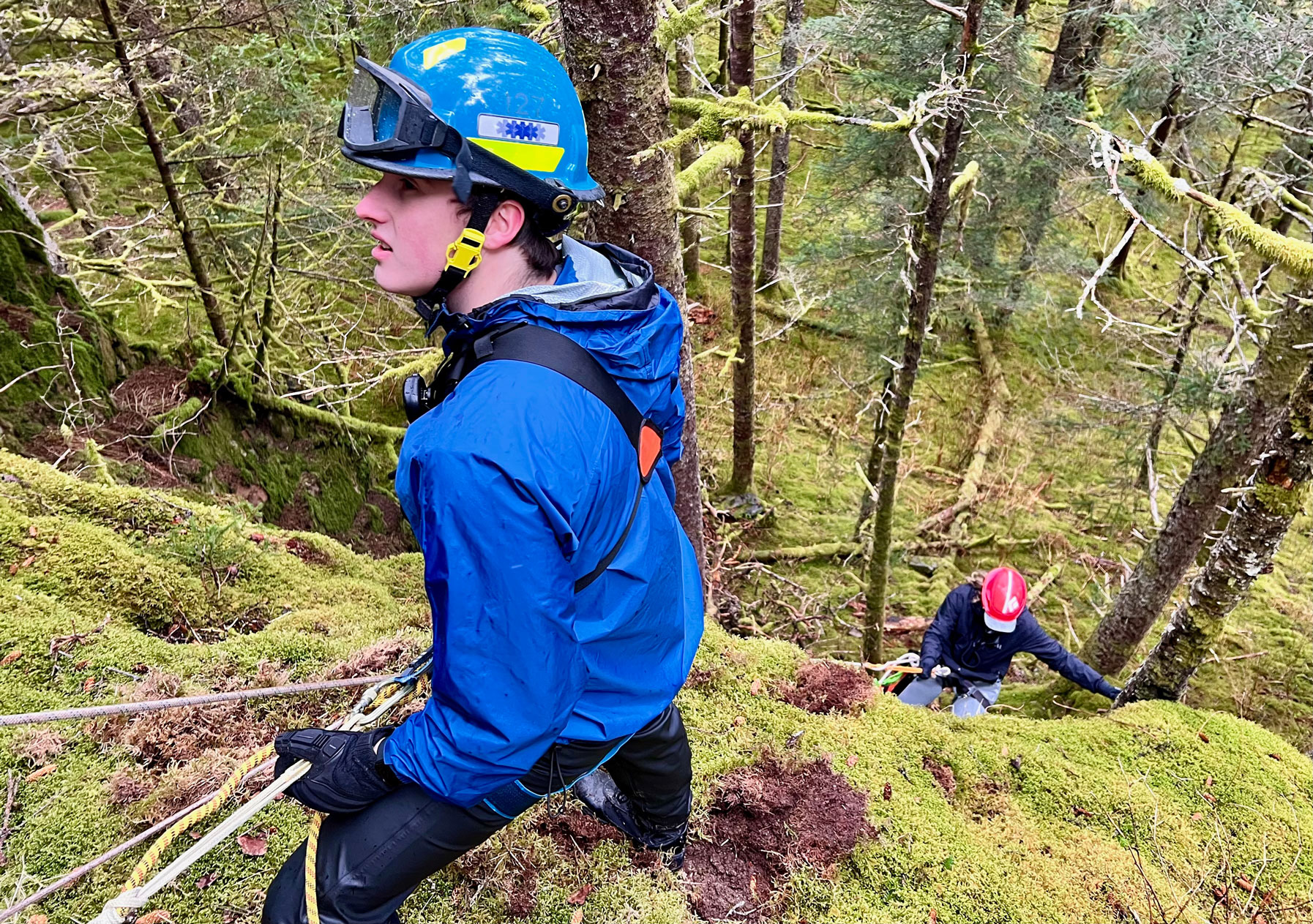
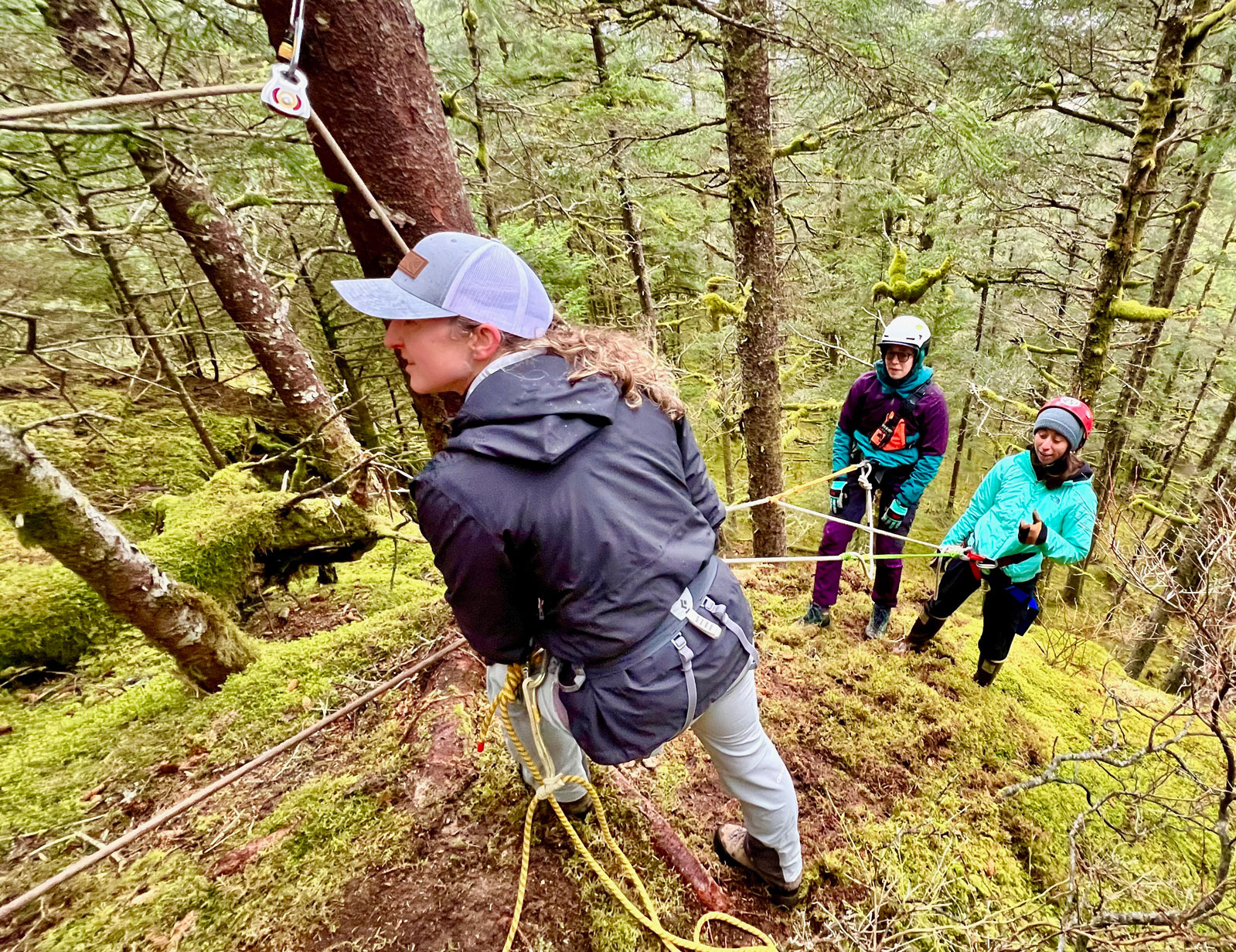
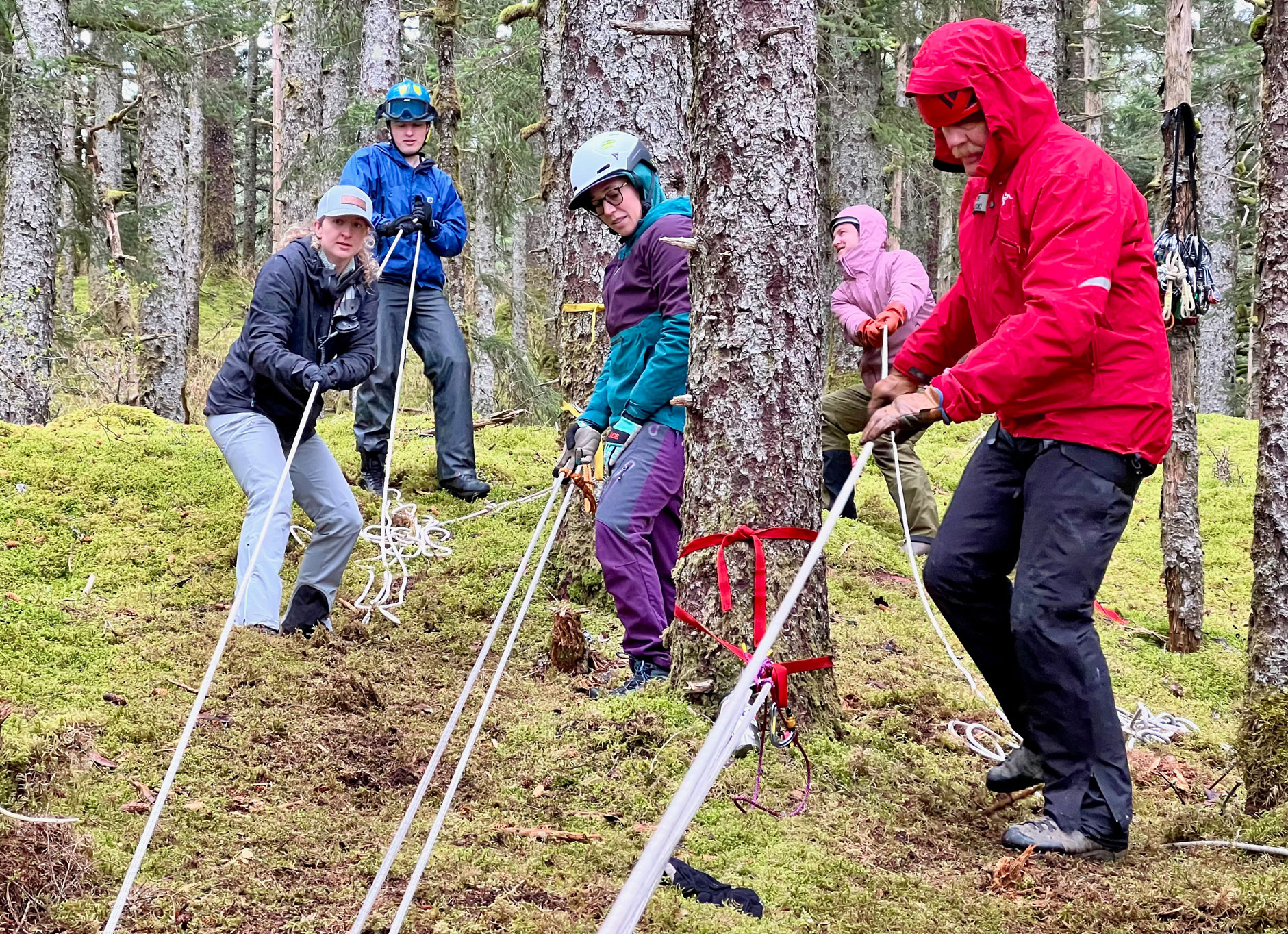
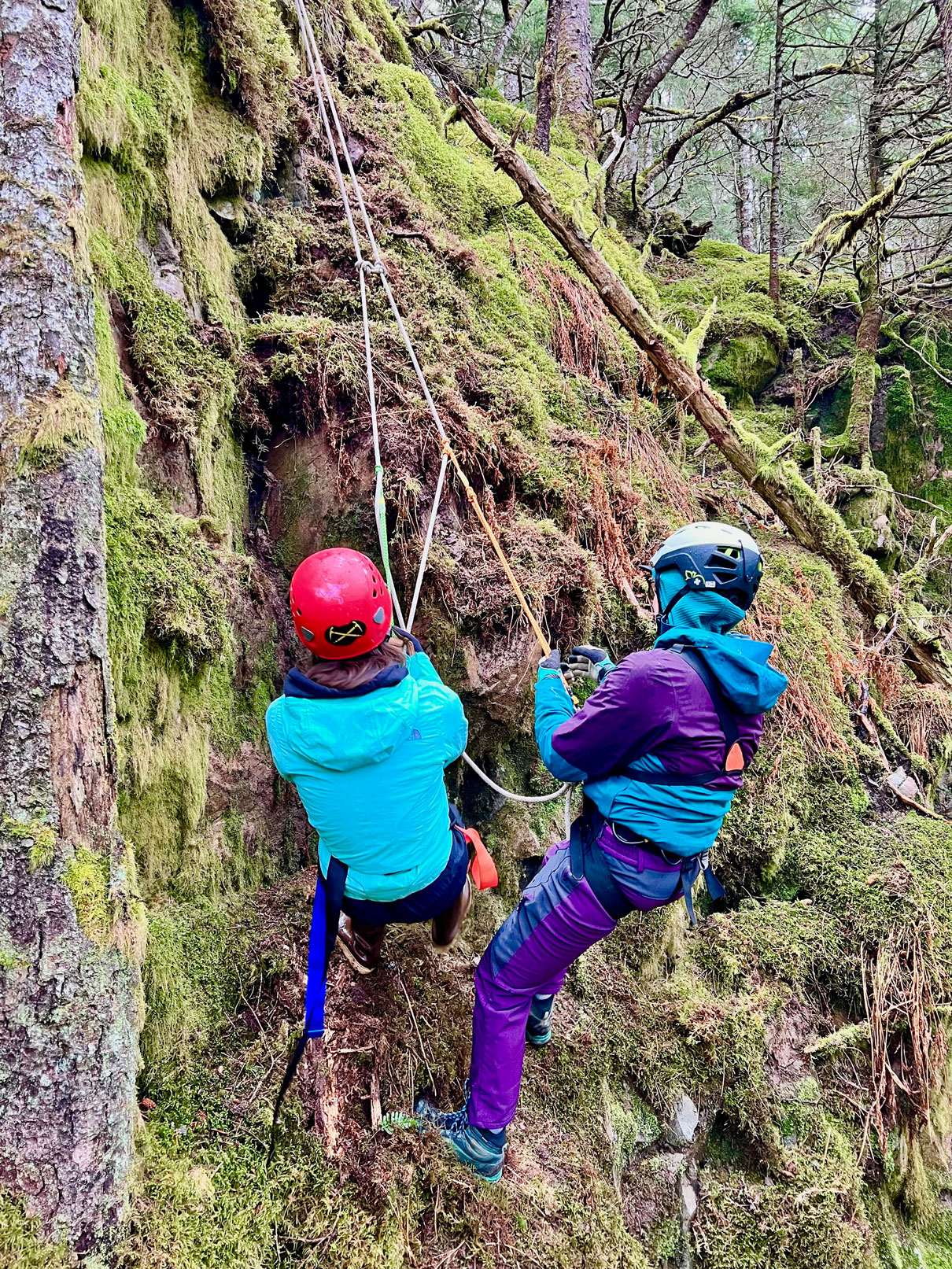
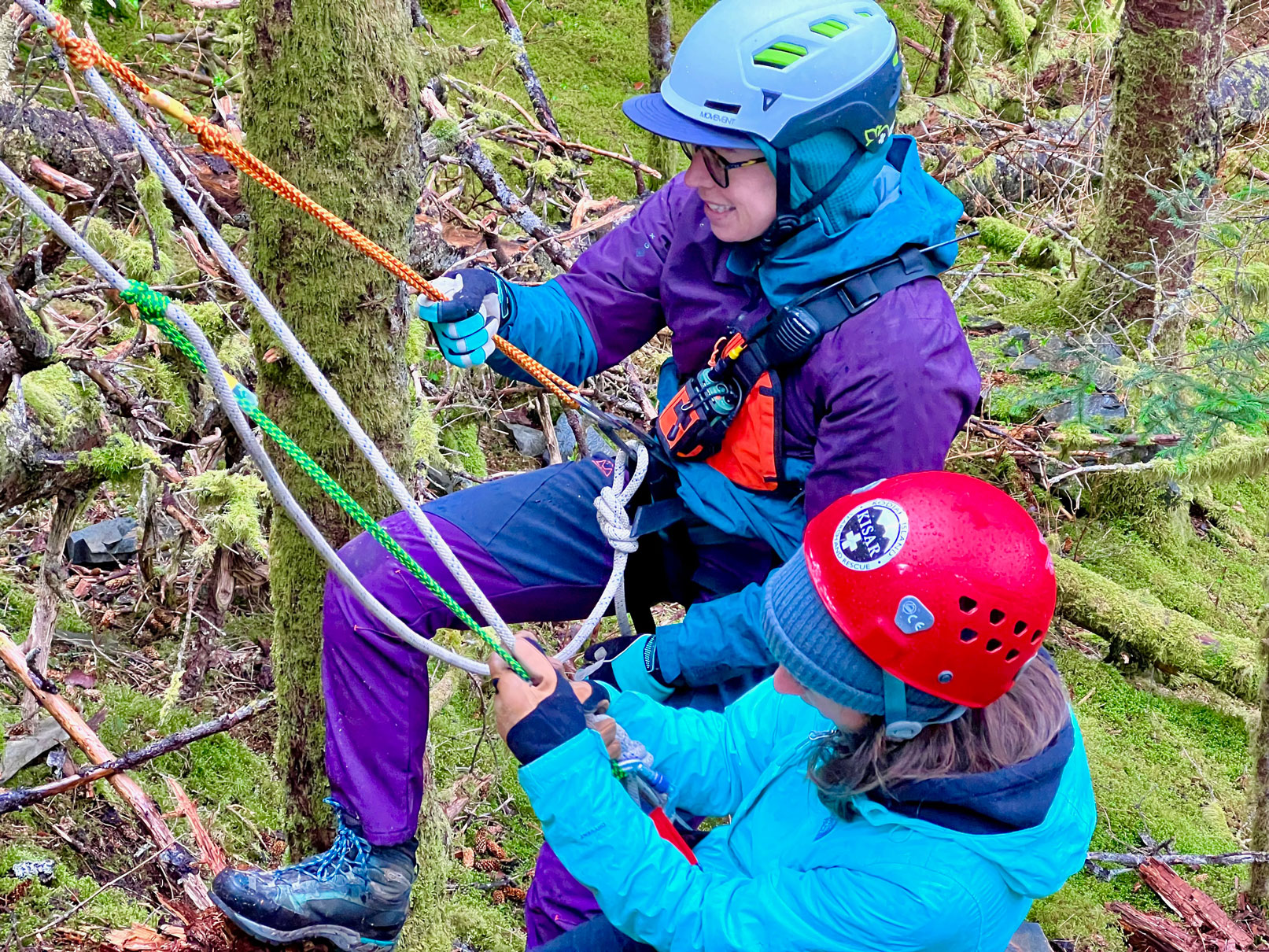
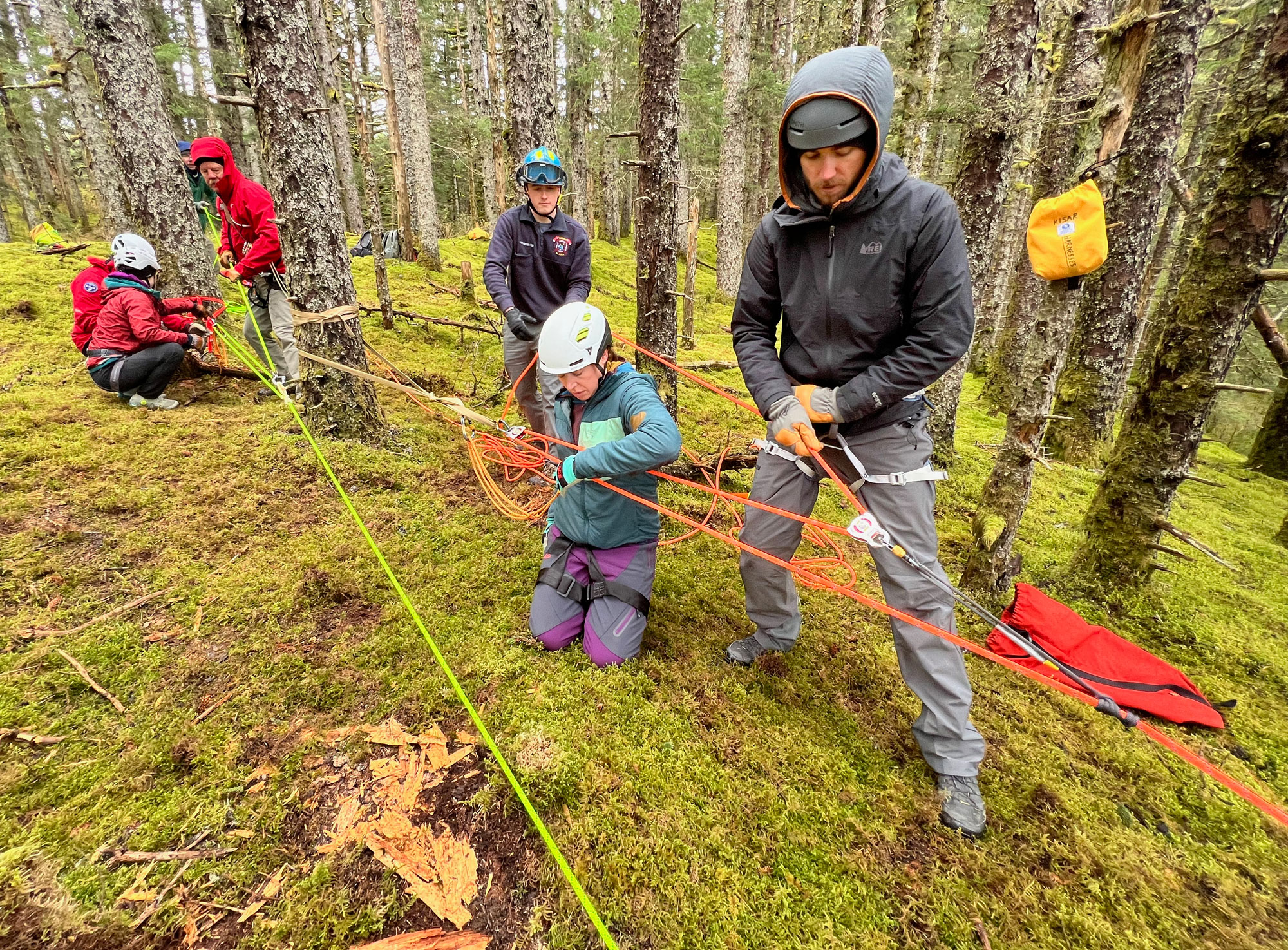
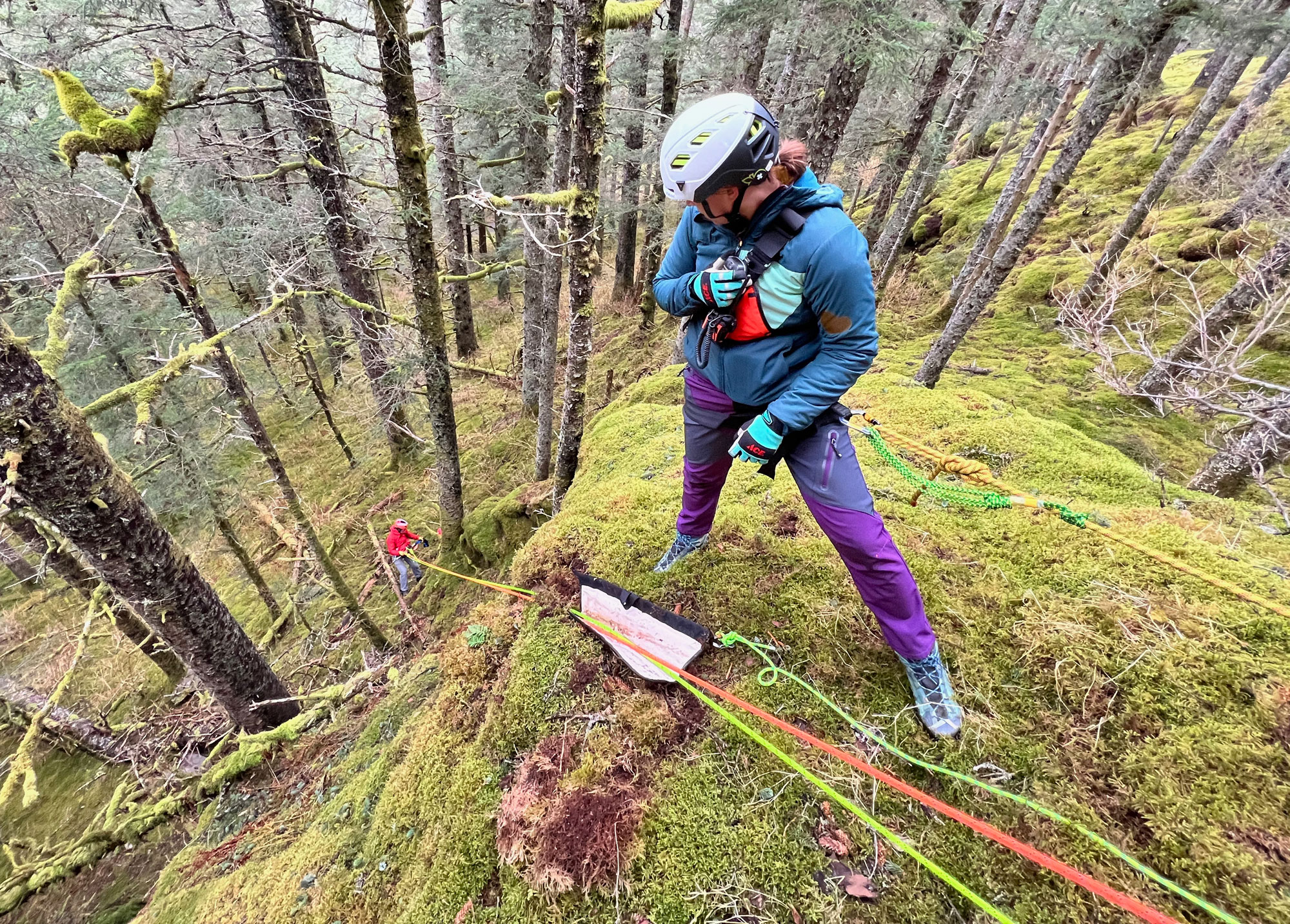
For KISAR’s May training we headed into Fort Abercrombie State Park and constructed a dual capability two-tensioned rope system to perform a ‘pick-off’ rescue of a subject in complicated high-angle terrain. The group explored building anchors using the trees at the top of the cliff, assembled a twin rope lowering system with one rope passing through a high redirect near the cliff top to assist with the edge transition, and then lowered a rescuer to where the subject was located at the base of the cliff. The rescuer then placed the subject in a Cobra buckle ‘quick-release’ harness. The team at the top converted the rope systems to a raise configuration and brought the rescuer and subject back up the cliff. We performed 4 repetitions of the exercise to allow KISAR members to experience multiple tasks in the scenario such as directing the overall operation, acting as rescuer, subject, edge attendant, prusik minder, or brake operator, etc.
The dual capability two-tensioned rope system was constructed based on the rigging manual Philip put together for KISAR which is available as a printable pdf booklet.
For our second April training, KISAR was joined by two instructors (Mark Stigar and Brent Taylor) and a K9 (Lyra) from Matanuska Search and Rescue (matsaralaska.org/) who provided a 4-day, Alaska-focused, search and rescue course they developed called called SAR Academy. It was a broad and thorough introduction to SAR operations and skills based on ASTM standards (astm.org). Mark and Brent brought decades of professional SAR and medical experience which added context and color to the excellent course materials. The K9, Lyra, was a joy to work with and impressed us with her training and excellent nose. The KISAR members in attendance were a mix of new folks and old hands and everyone gained valuable knowledge in all aspects of search theory, management, field deployment, and medical response in both urban and wildland environments.
A huge thanks to Trooper Josh Boyle for organizing the training on KISAR’s end, and to Mark, Brent, and Lyra for giving us so much of their time and expertise to make KISAR a more effective organization in emergency response for the Kodiak community.
For the first of KISAR’s April trainings, Blaine Smith provided a morning lecture on avalanche accident rescue management followed by a day on Pyramid Mtn demonstrating avy accident response techniques. We also practiced safe mountain snow travel strategies plus crampon and ice ax use. Blaine has over 30 years experience guiding alpine climbs throughout Alaska and overseas and is an instructor at the Alaska Avalanche School. He has also worked as an avalanche forecaster in Alaska and on the mountain west coast of the US. His extensive professional and personal experience guiding mountain expeditions and studying snow science makes him an invaluable resource for KISAR.
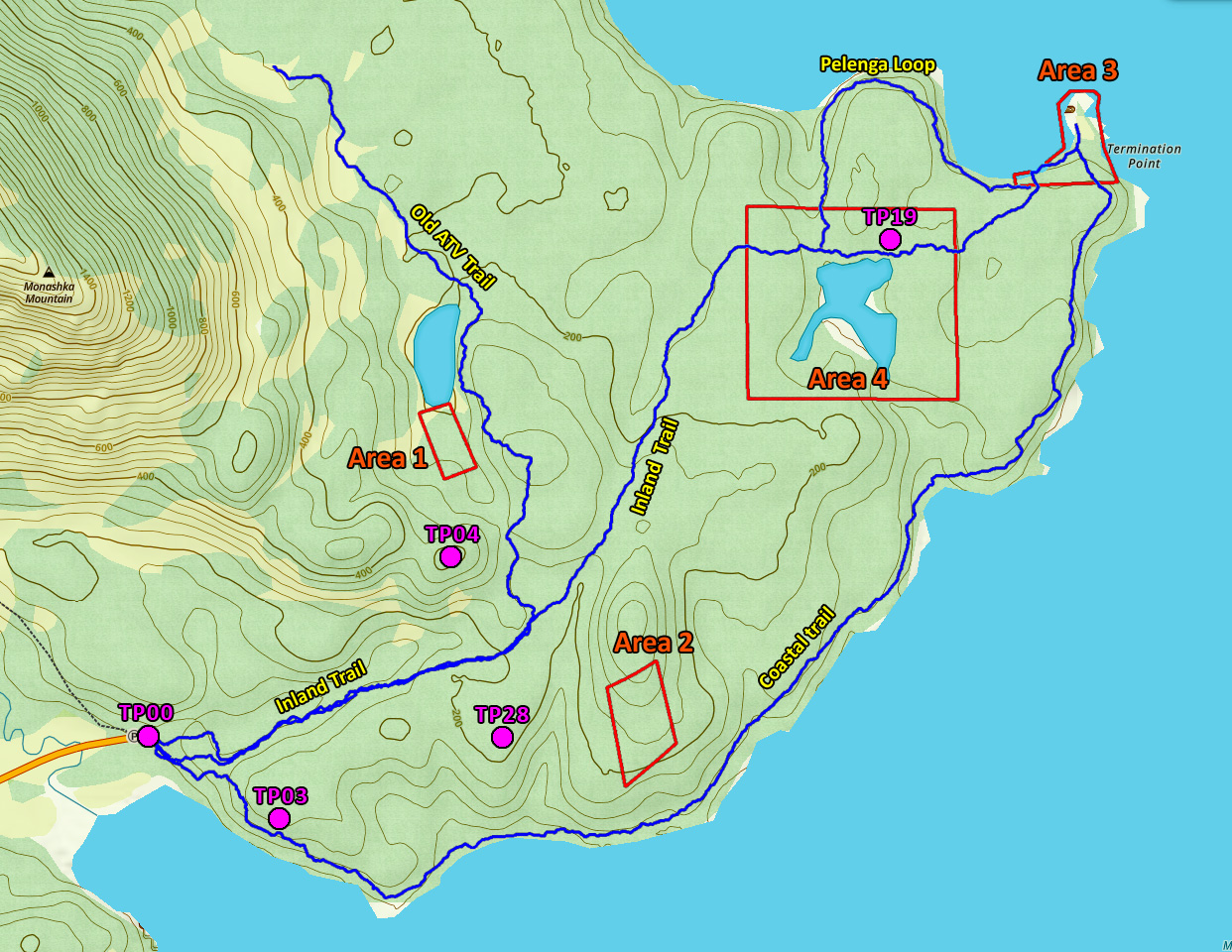
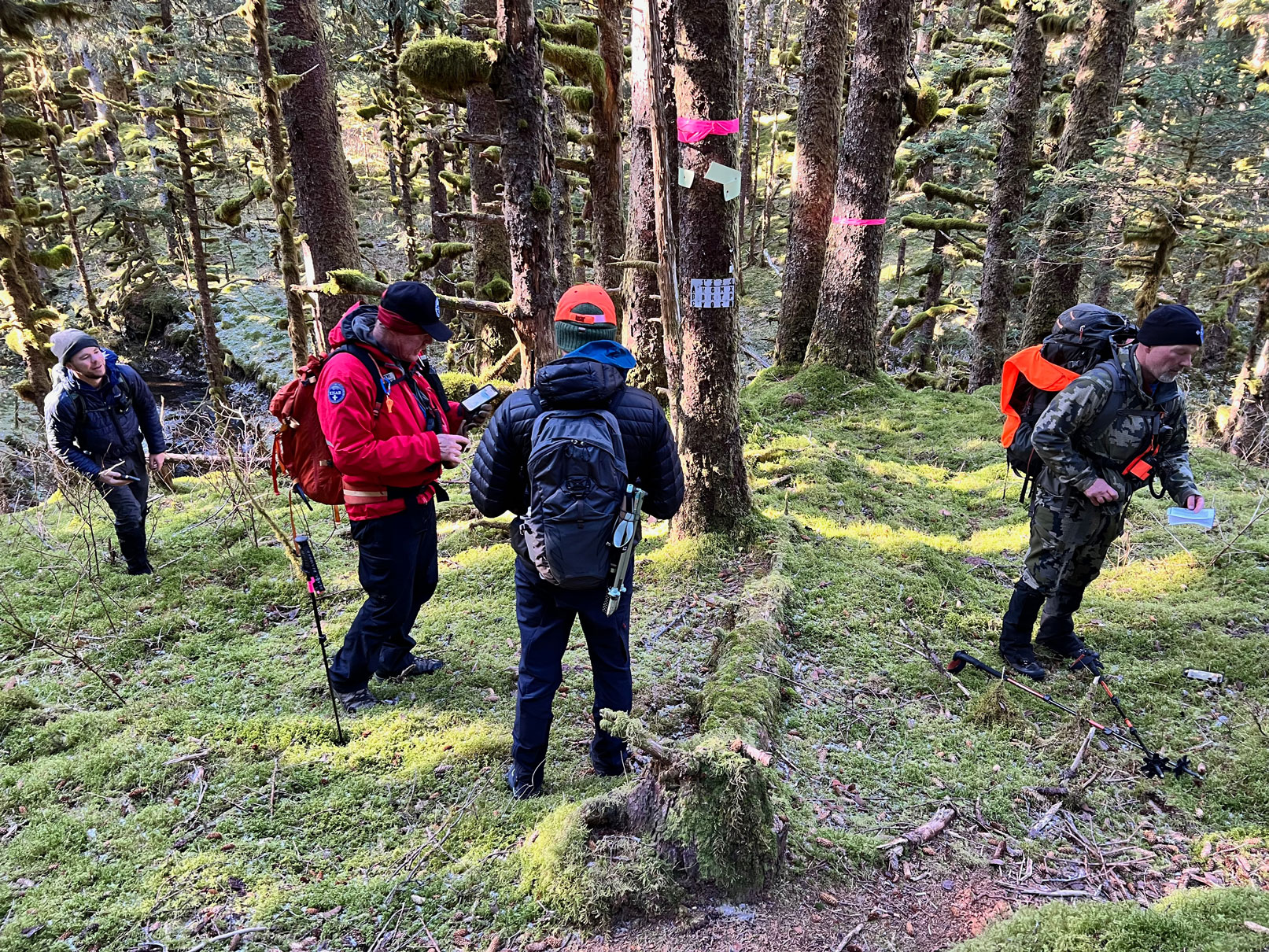
KISAR will hold its February training at Termination Point on Saturday February 24. The focus of the training will be on orienteering, area search, small hasty team, and radio comms. Depending on the number of participants, we will break into as many as 3 groups. The routes, polygons, and waypoints for the training will be emailed to participants as kmz documents that can be opened in the Gaia GPS phone app.
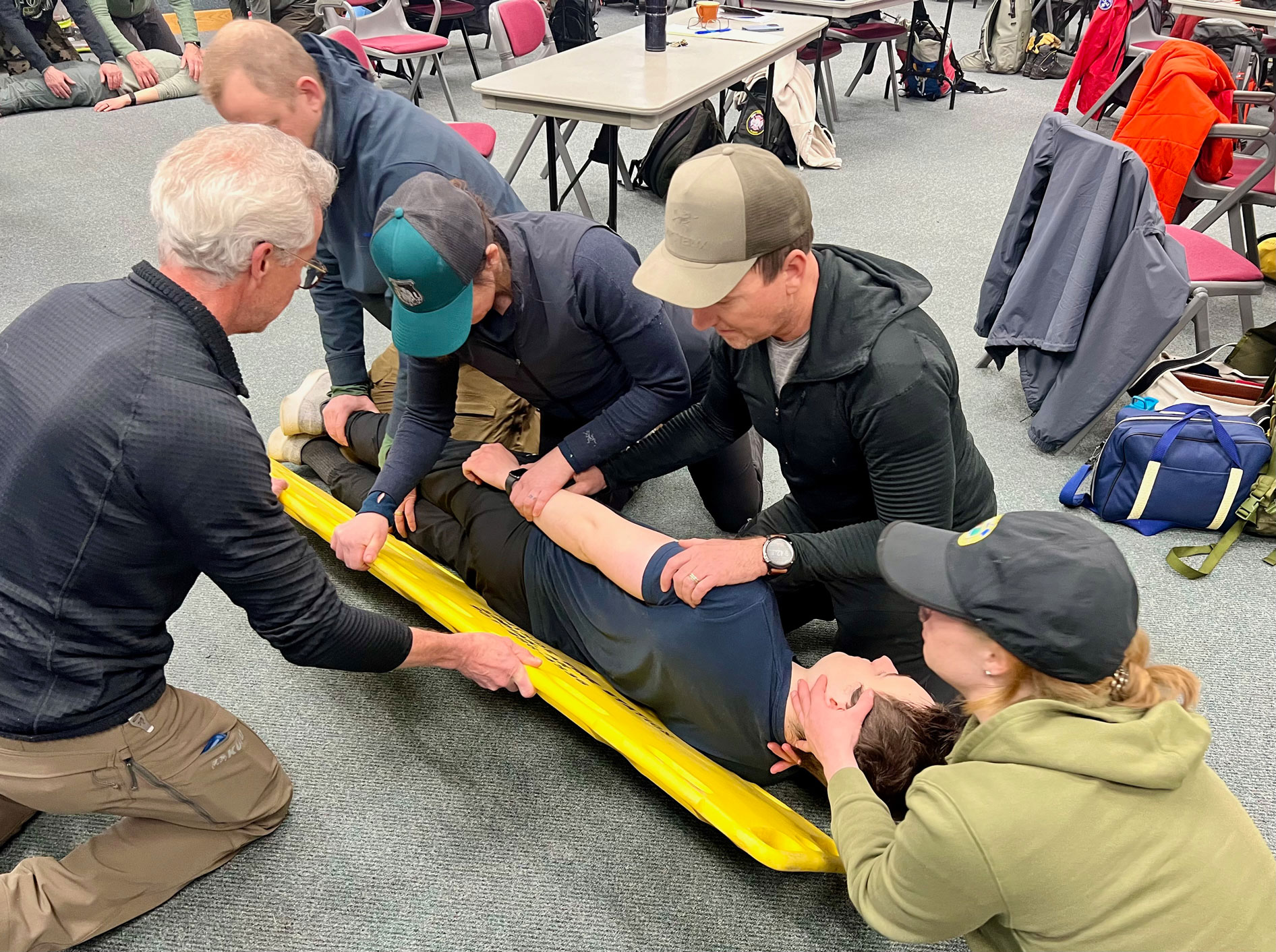
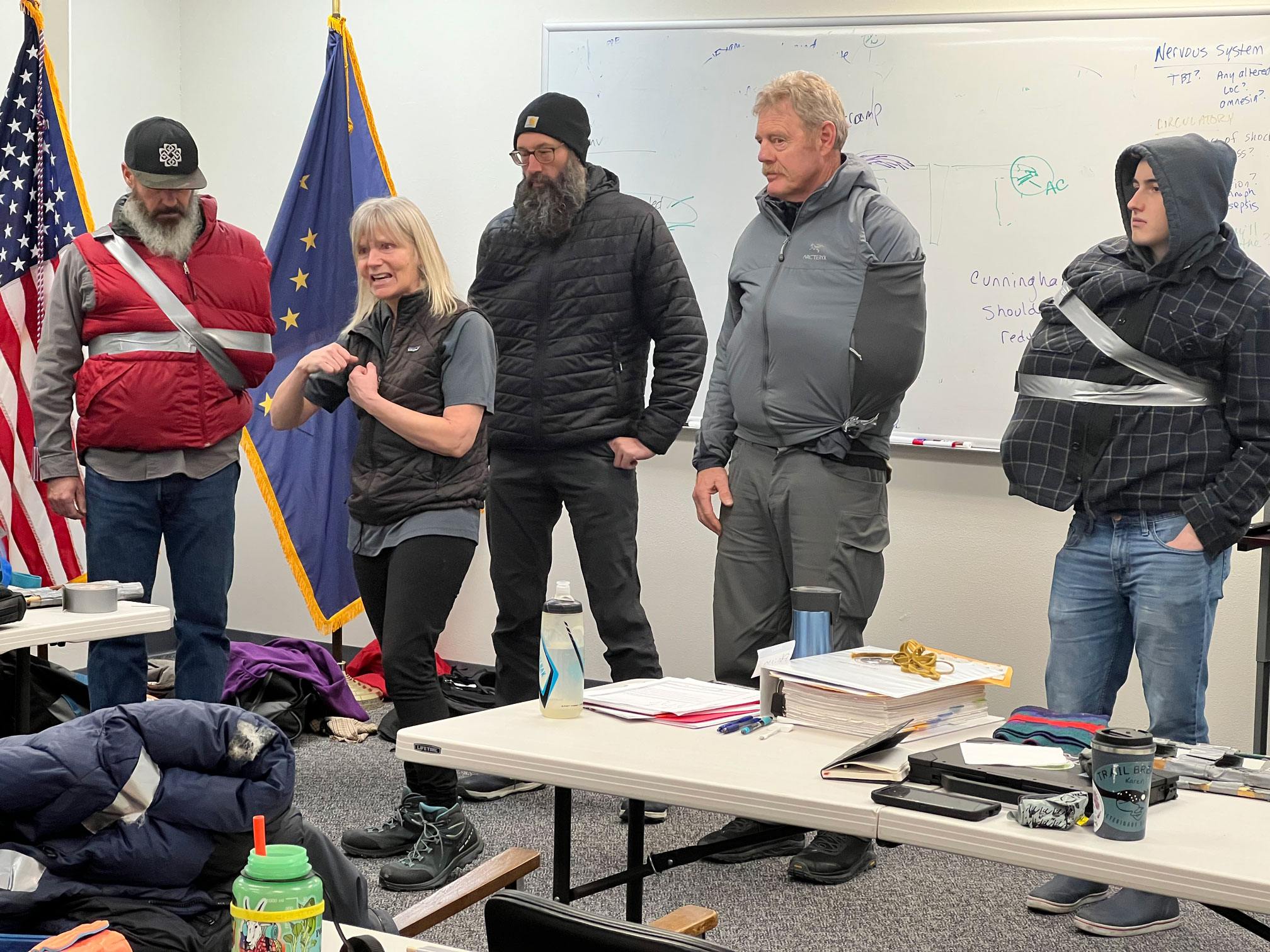
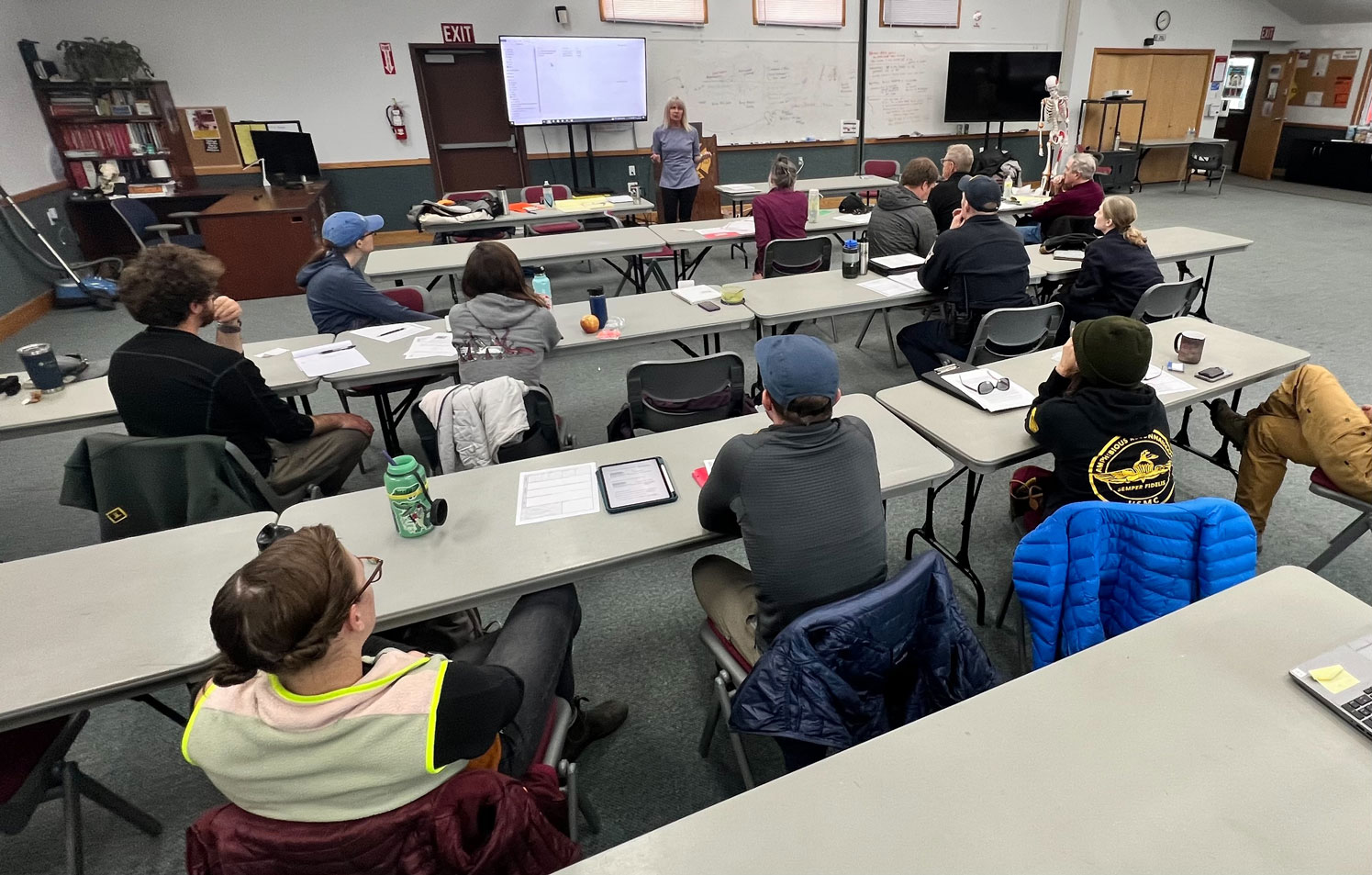
For KISAR’s January training we brought Deb Ajango back to Kodiak to teach a full Wilderness First Aid (WFA) certification course. We always enjoy Deb’s charismatic delivery and experience-fueled knowledge of the subject. We invited the Alaska State Troopers and Bayside Fire Hall to participate in the training.
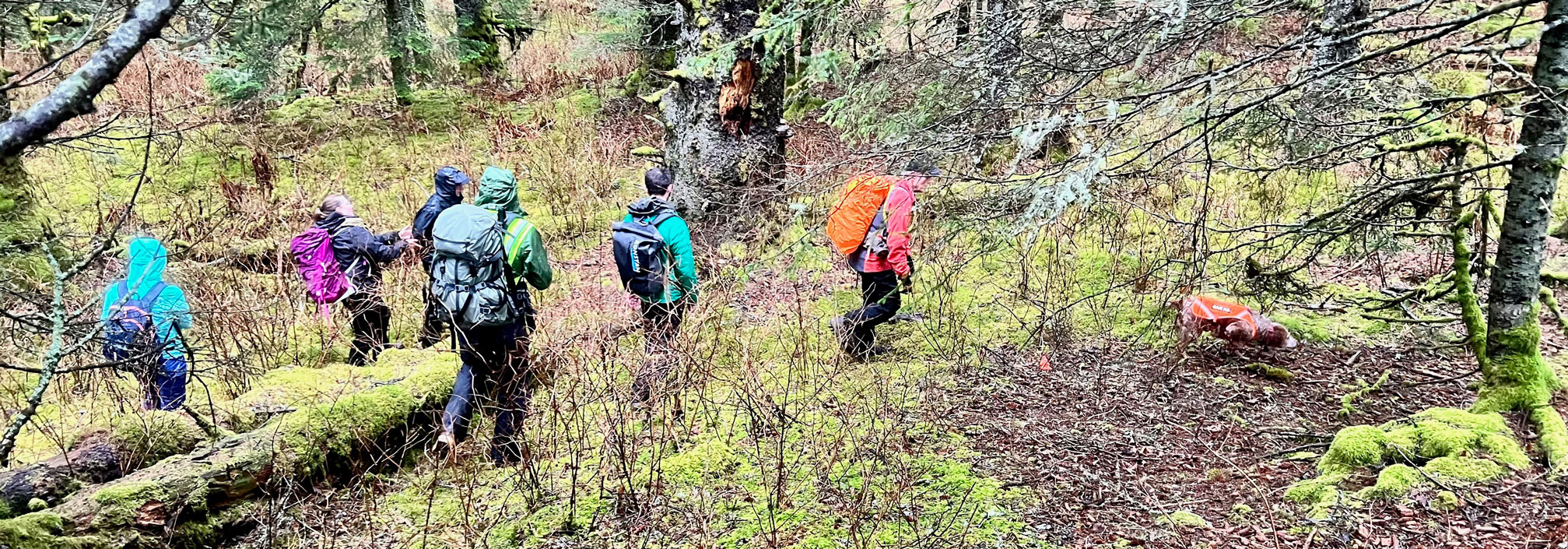
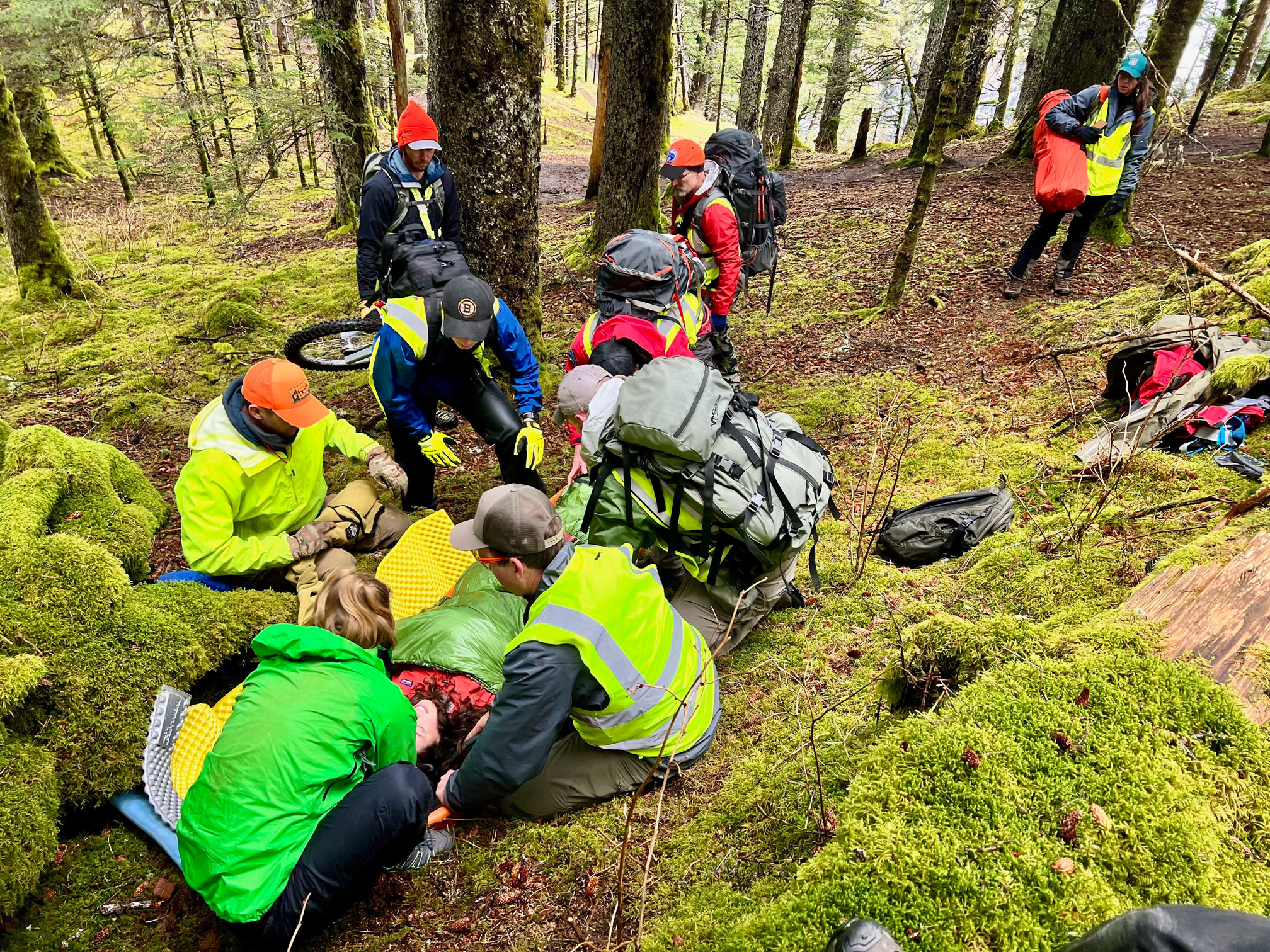
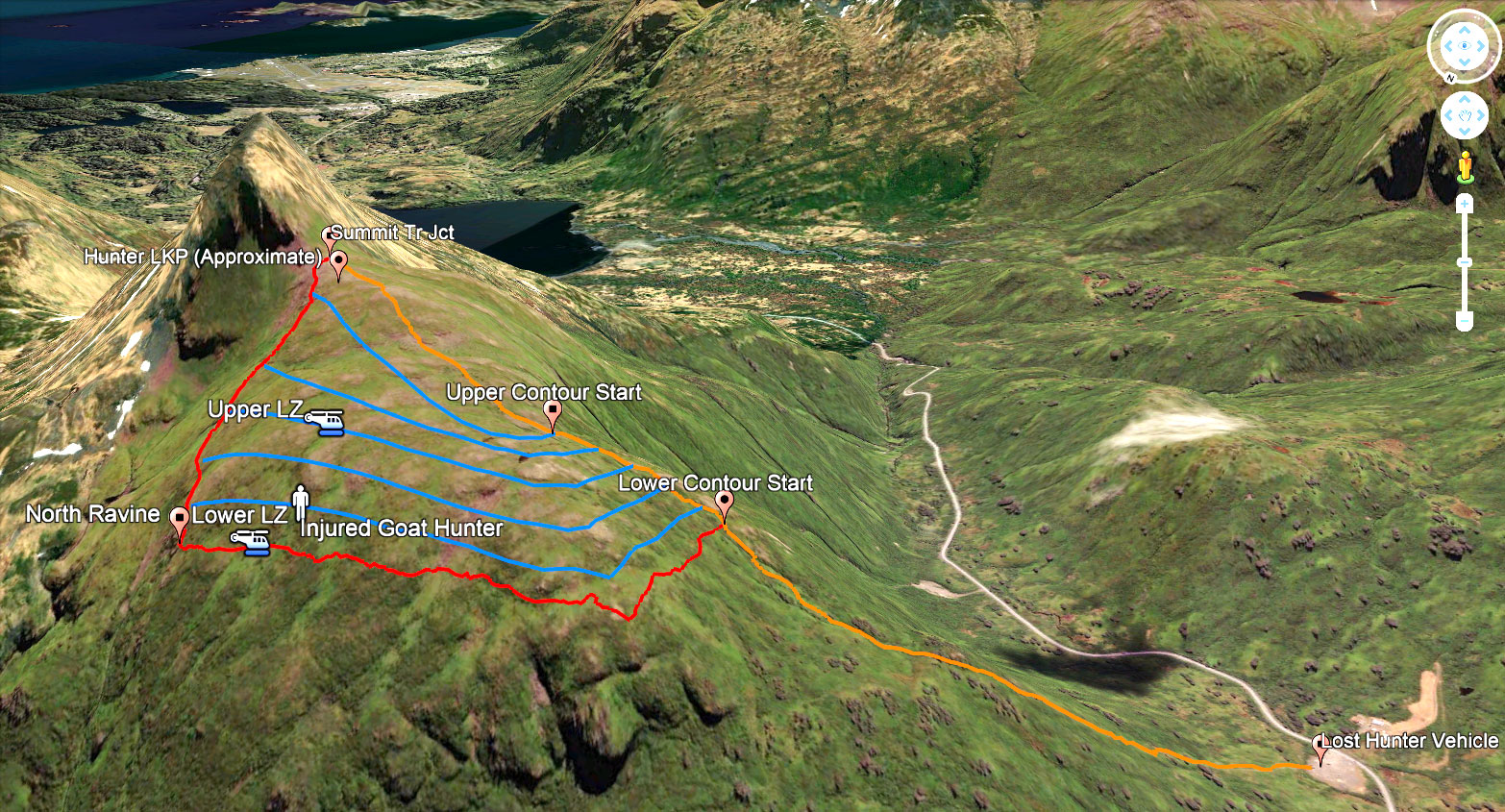
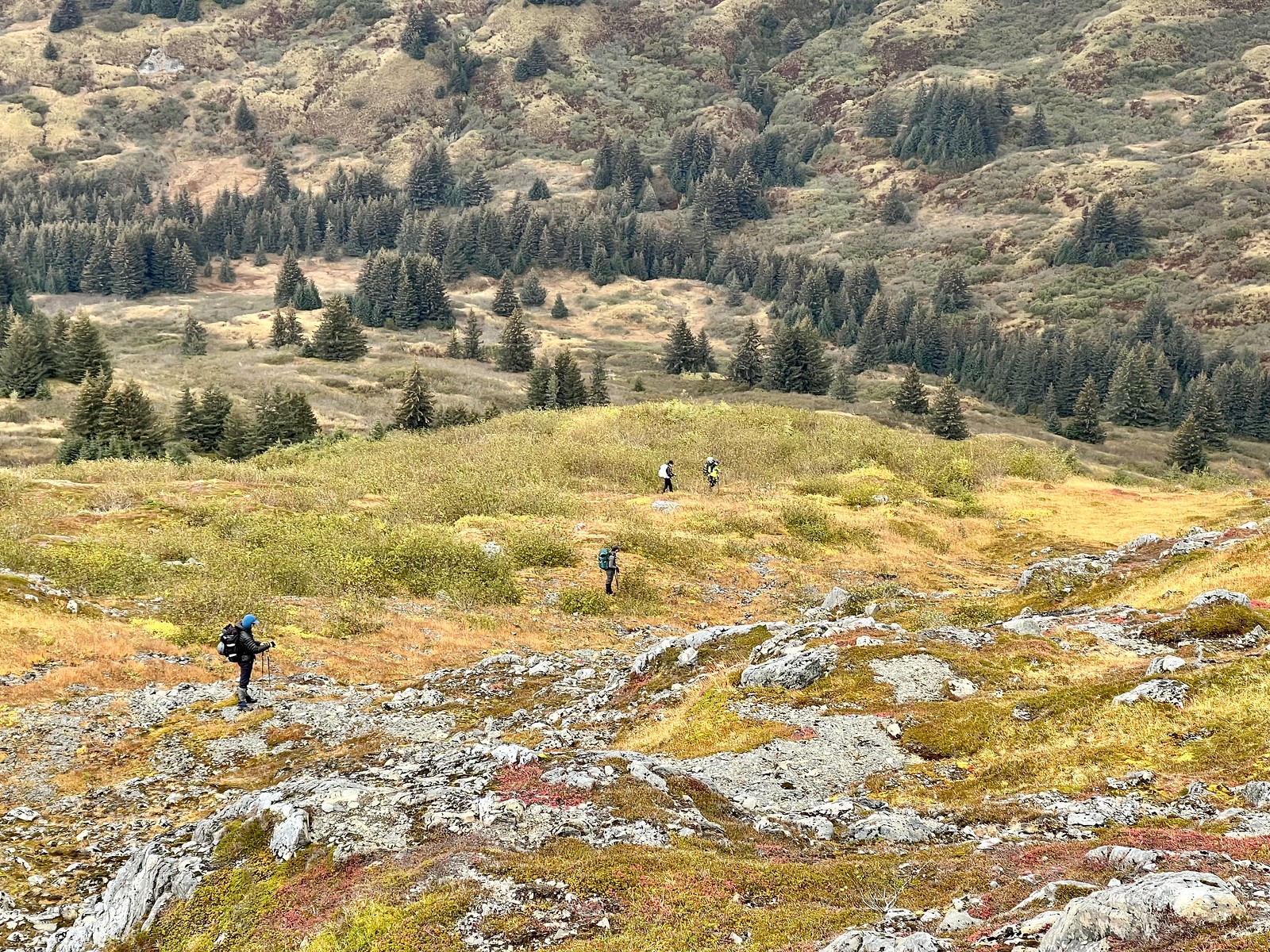
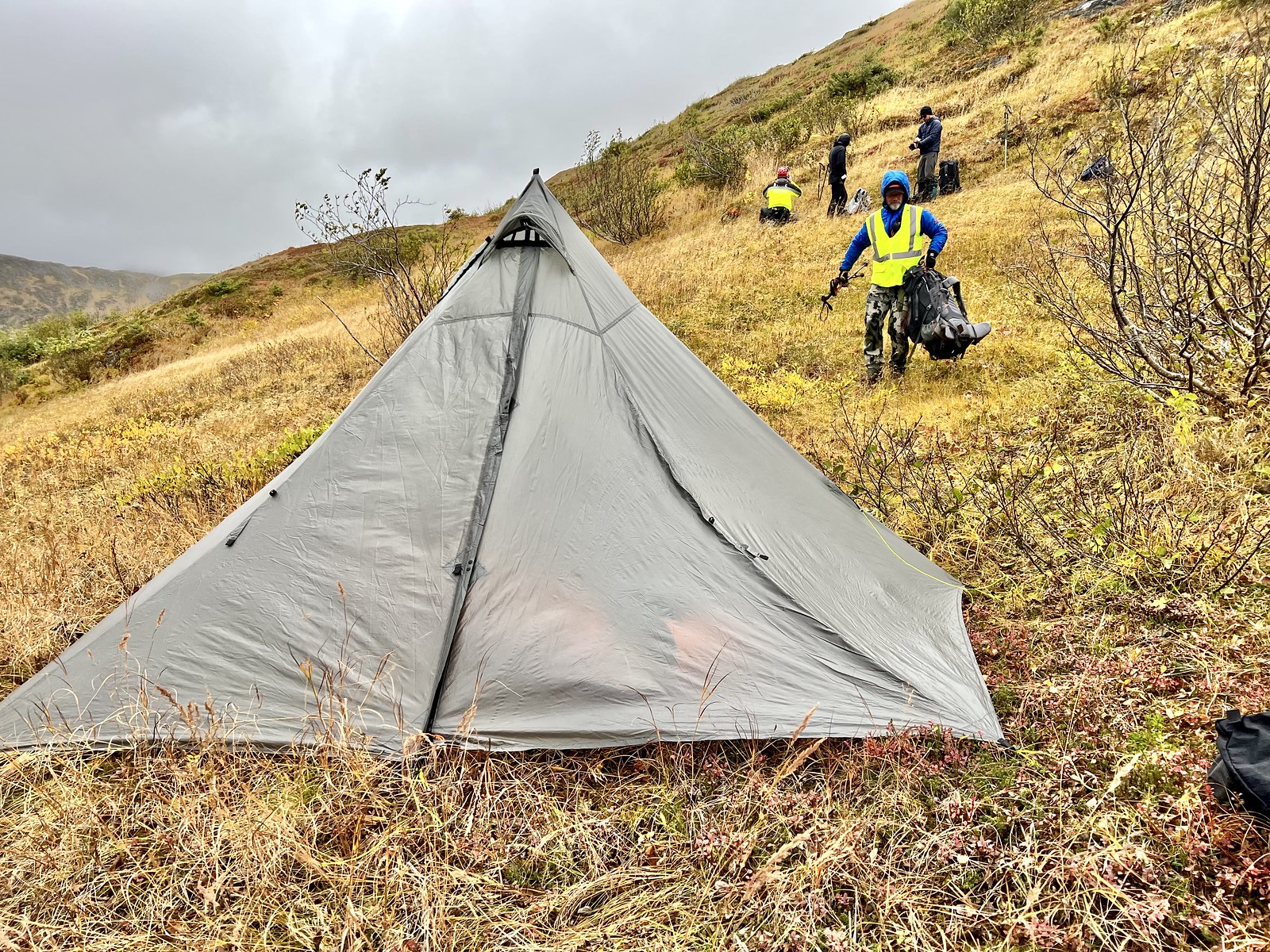
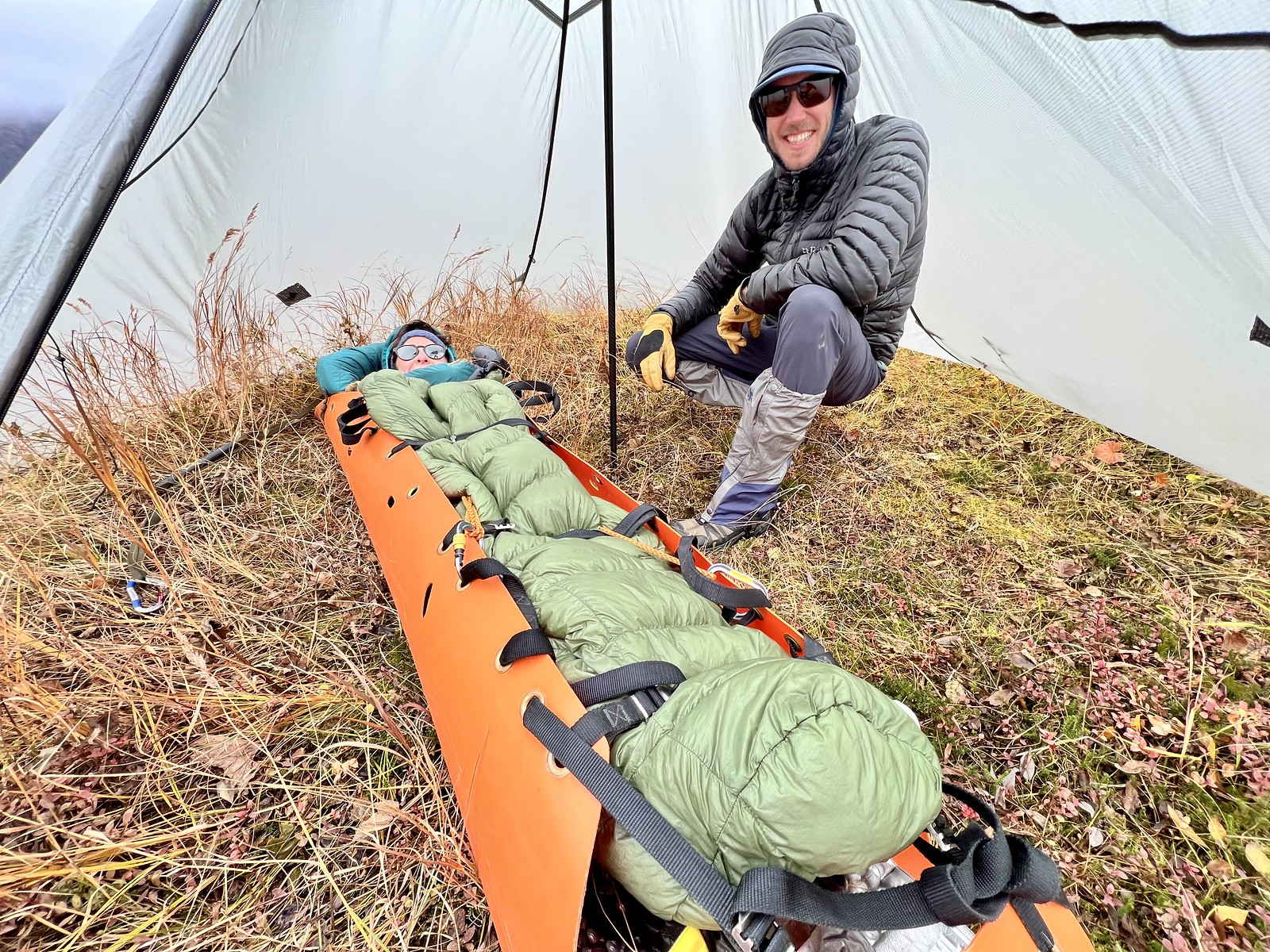
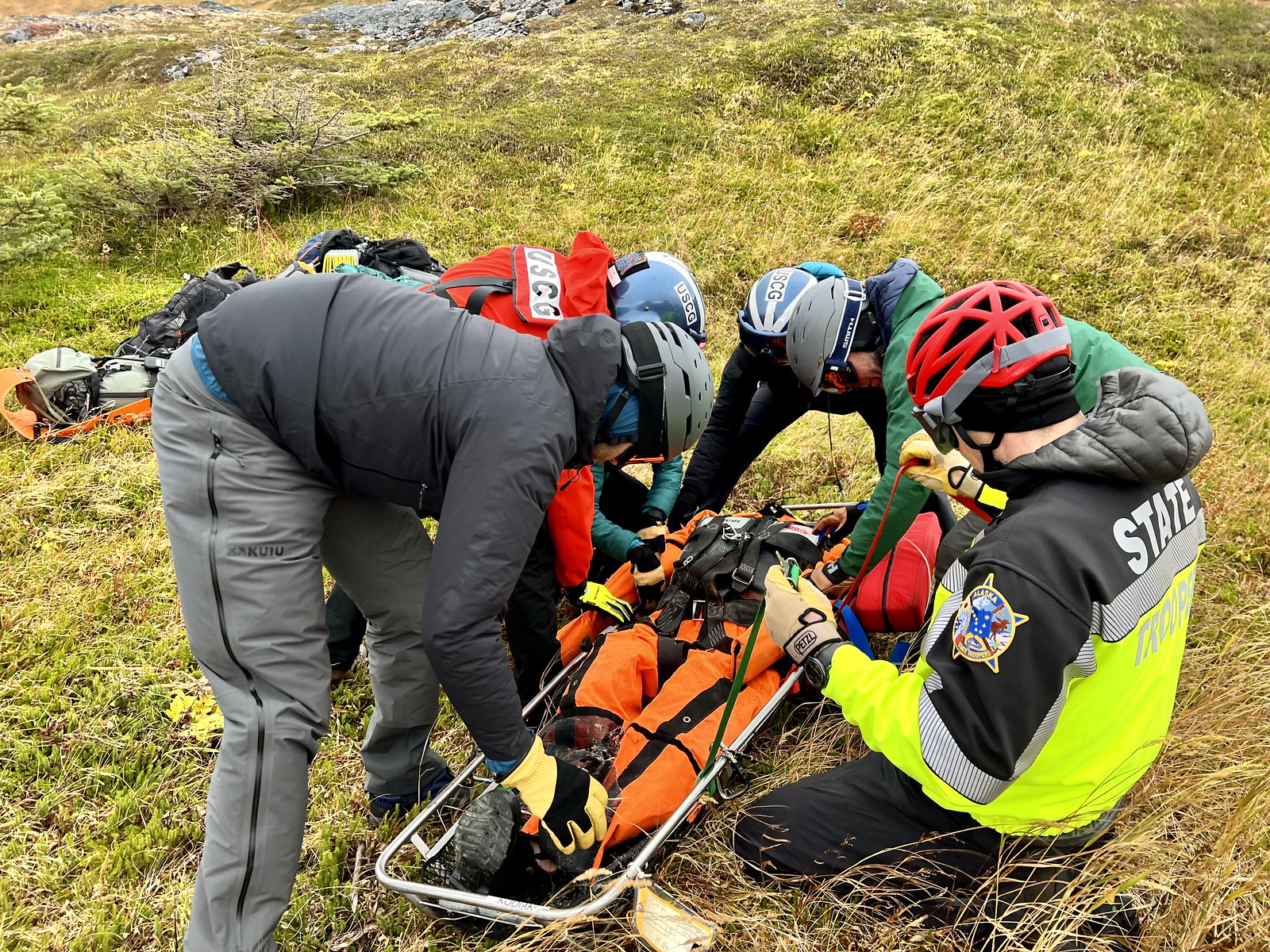
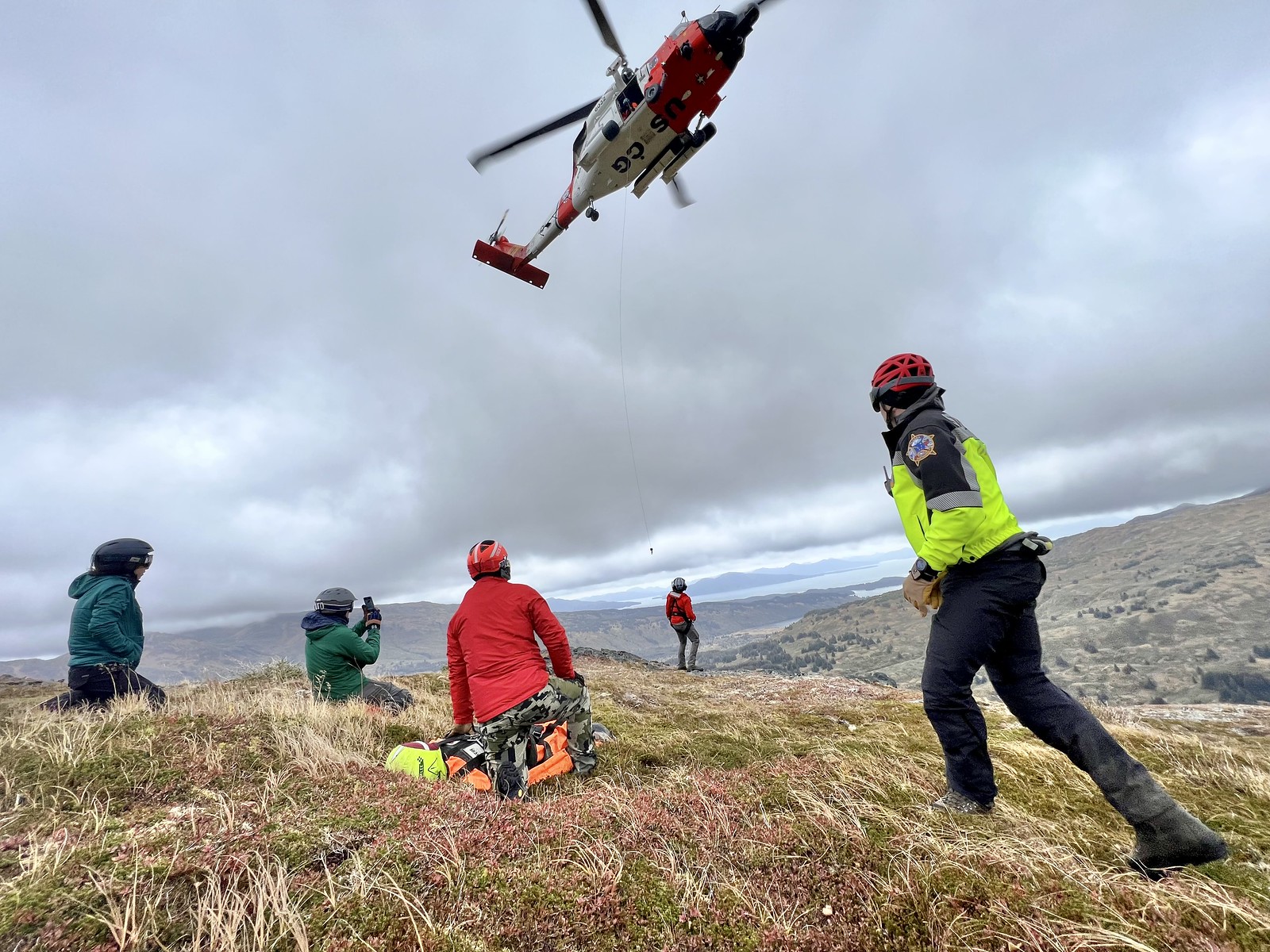
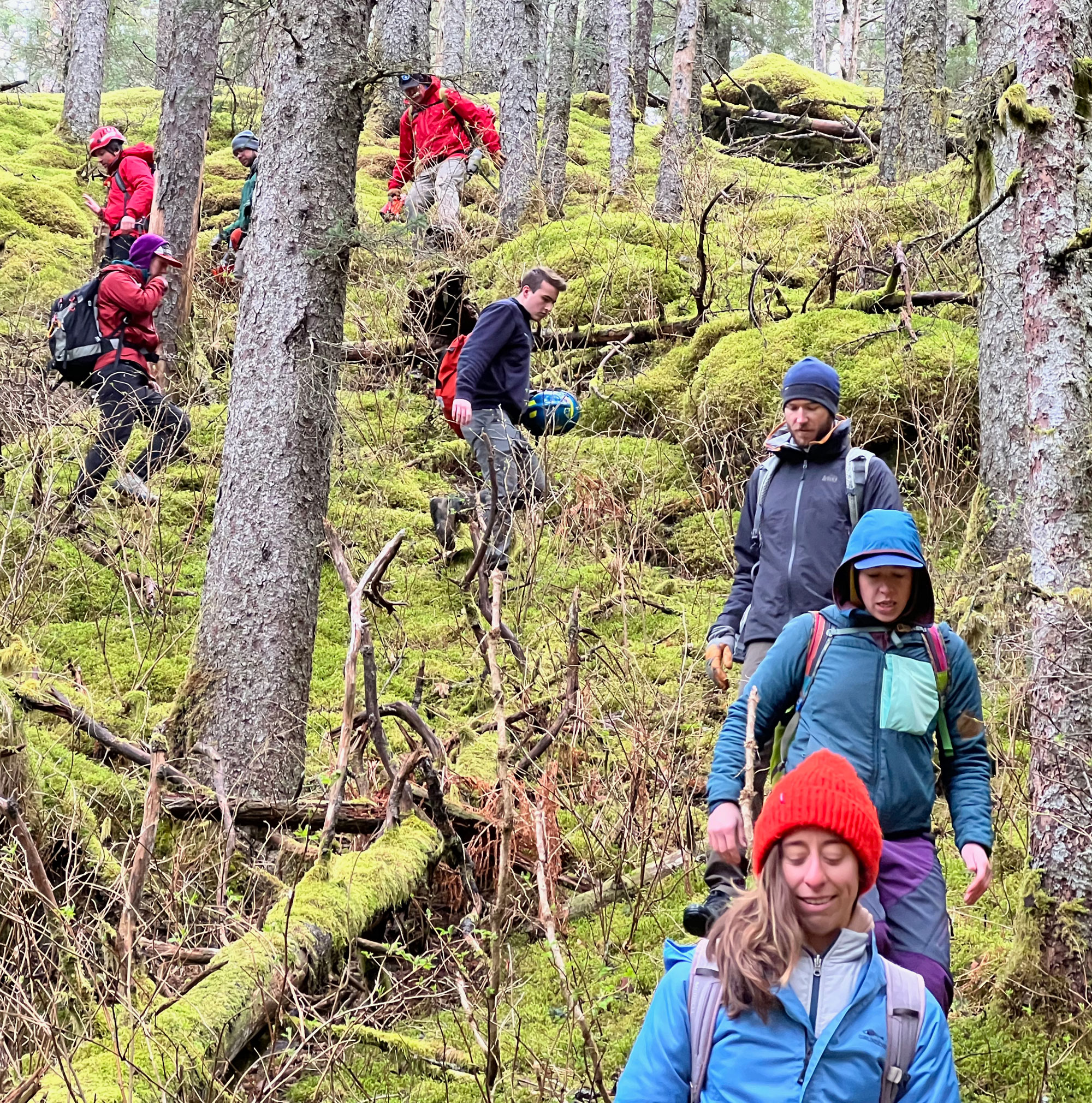
For KISAR’s October training we were invited to participate in an inland SAR training exercise with the USCG Air Station and the Royal Canadian Air Force. The Canadian’s CH-149 Cormorant had mechanical issues and did not make it to Kodiak, but KISAR and the USCG were able to do litter hoist reps using both MH-60 and MH-65 helicopters to close out the exercise. Prior to the helo portion, KISAR members performed a mock call-out for a lost and injured hunter located somewhere on the north side of Pyramid Mountain. Members mustered in the Pyramid Mtn parking lot at 1100 and then deployed up Pyramid to perform an area search for a responsive but immobile subject using a critical separation line-abreast sweep search. After the subject was located, KISAR members provided medical care including a patient assessment, stabilizing the lower extremity injury in an improvised leg splint, and securing the patient with a climbing harness anchored to KISAR’s SKED litter. We set up a floorless pyramid shelter to protect the patient while waiting for verification of a helicopter response, and then carried the patient higher on the mountain to a more suitable extraction point. Litter hoist reps were then performed by both MH-60 and -65 aircraft, after which KISAR members descended back to the parking area and demobilized.
A huge thanks to the USCG Air Station for putting the training together and allowing KISAR members to participate and conduct a ground search and patient care exercise prior to the hoist training. We want to show special appreciation to LCDR Ian Erickson for coordinating the exercise, and MH-60 pilot LT Caitlyn Gever for shadowing KISAR members on the ground, learning the capabilities KISAR can bring to inland SAR cases, and offering insights on how KISAR could better assist responding air assets.
Below are a few images from the training. More pictures are available on Philip’s Flickr account.
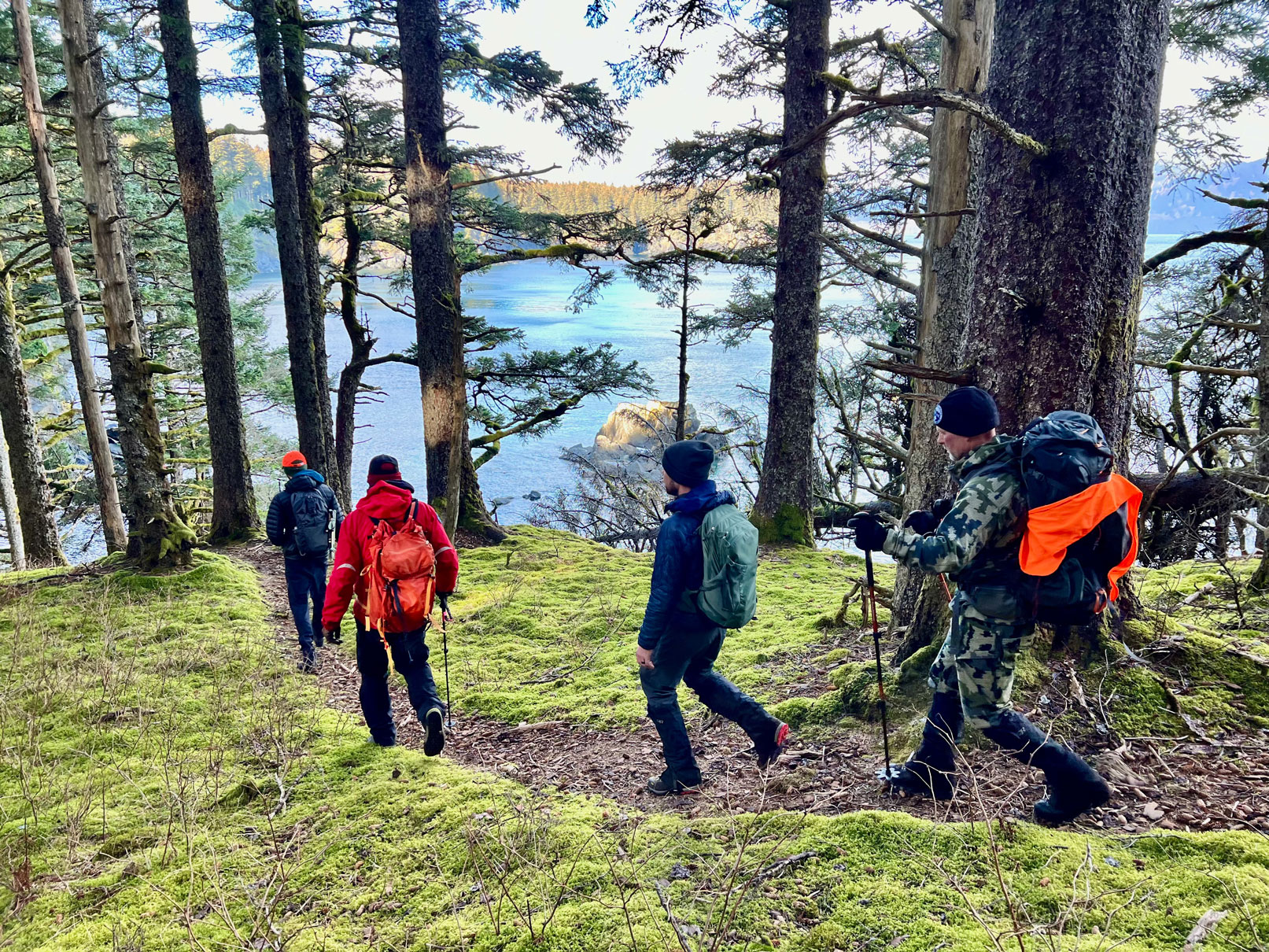
KISAR members performing a critical separation line-abreast area sweep search:
Setting up a shelter to house the patient before extraction:
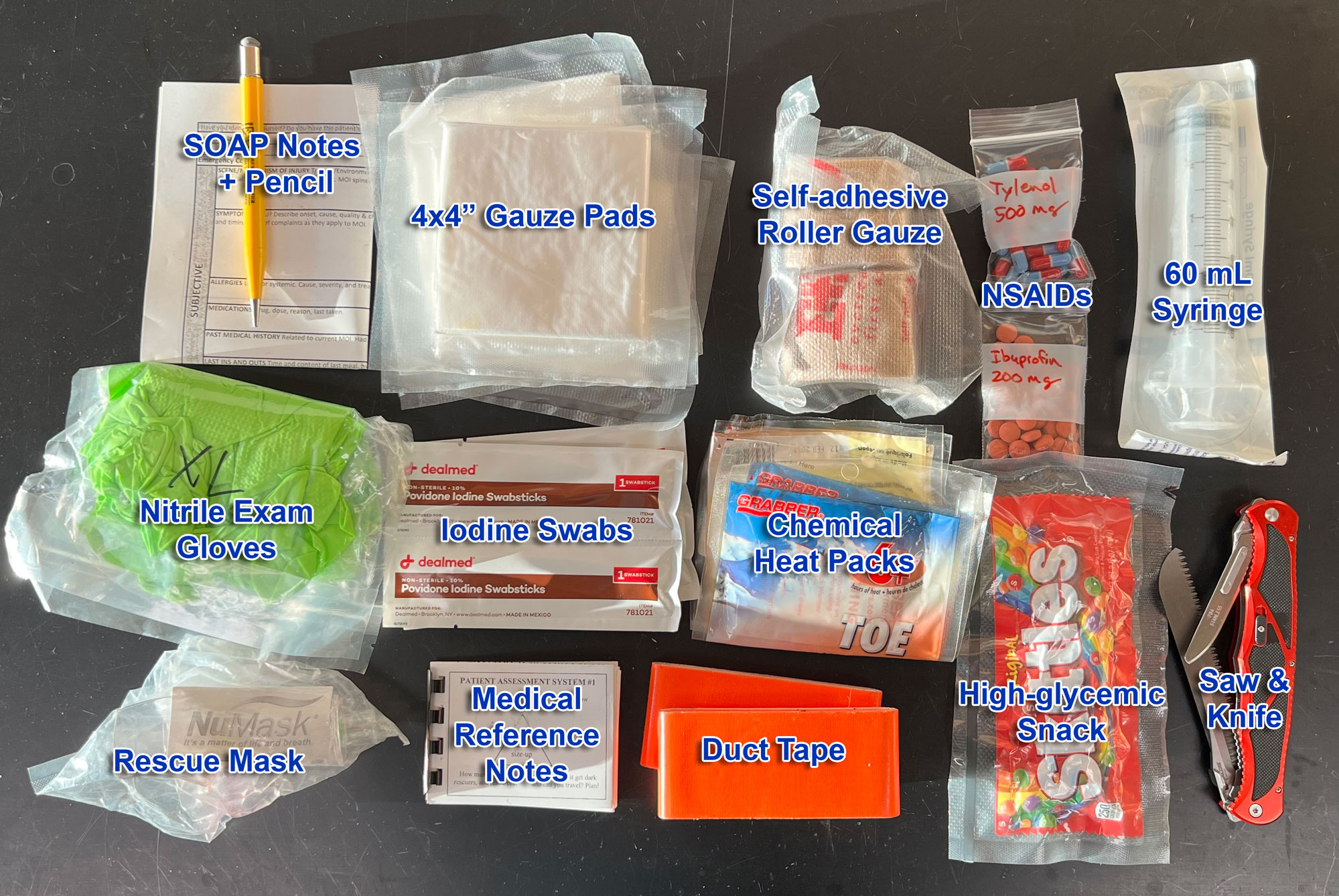
For our June training, Deb Ajango of Safety Ed came down to Kodiak to offer her excellent Wilderness First Aid (WFA) refresher class to KISAR members. We always love when Deb works with us. She has an incredible breadth and depth of knowledge and experience in wilderness medicine, and her delivery is always engaging and informative. She spent time going over human physiology and the major biological systems in the body, then spoke about the most common ways these systems can become injured in wilderness settings. Finally, she ran 3-member teams (2 rescuers, 1 patient) through a variety of medical scenarios using the SOAP notes Philip developed for KISAR, resulting in a patient exam, assessment, monitoring, treatment plan, and evacuation tier.
For KISAR’s May training we headed into Fort Abercrombie State Park and constructed a dual capability two-tensioned rope system to perform a ‘pick off’ rescue of a subject in complicated high angle terrain. The group explored building anchors using the trees at the top of the cliff, assembled a twin rope lowering system with one rope passing through a high redirect near the cliff top to assist with the edge transition, and then lowered a rescuer to where the subject was located at the base of the cliff. The rescuer then placed the subject in a harness and the team at the top converted the rope systems to a raise configuration and brought the rescuer and subject back up the cliff. We performed 3 repetitions of the exercise to allow KISAR members to experience multiple tasks in the scenario such as directing the overall operation, acting as rescuer, subject, edge attendant, prusik minder, or brake operator, etc.
The dual capability two-tensioned rope system was constructed based on the rigging manual Philip put together for KISAR which is available as a printable pdf booklet or as individual images.
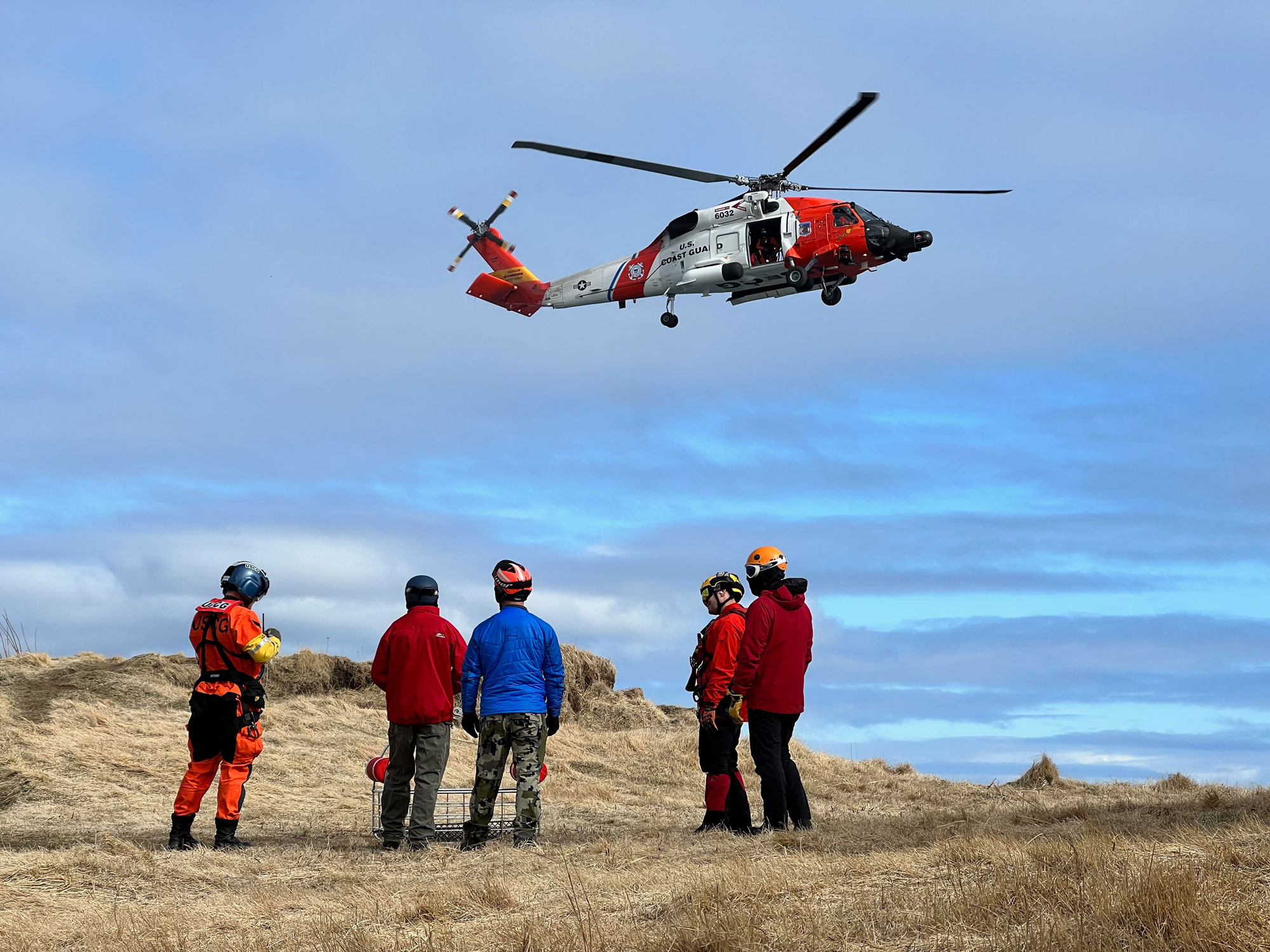
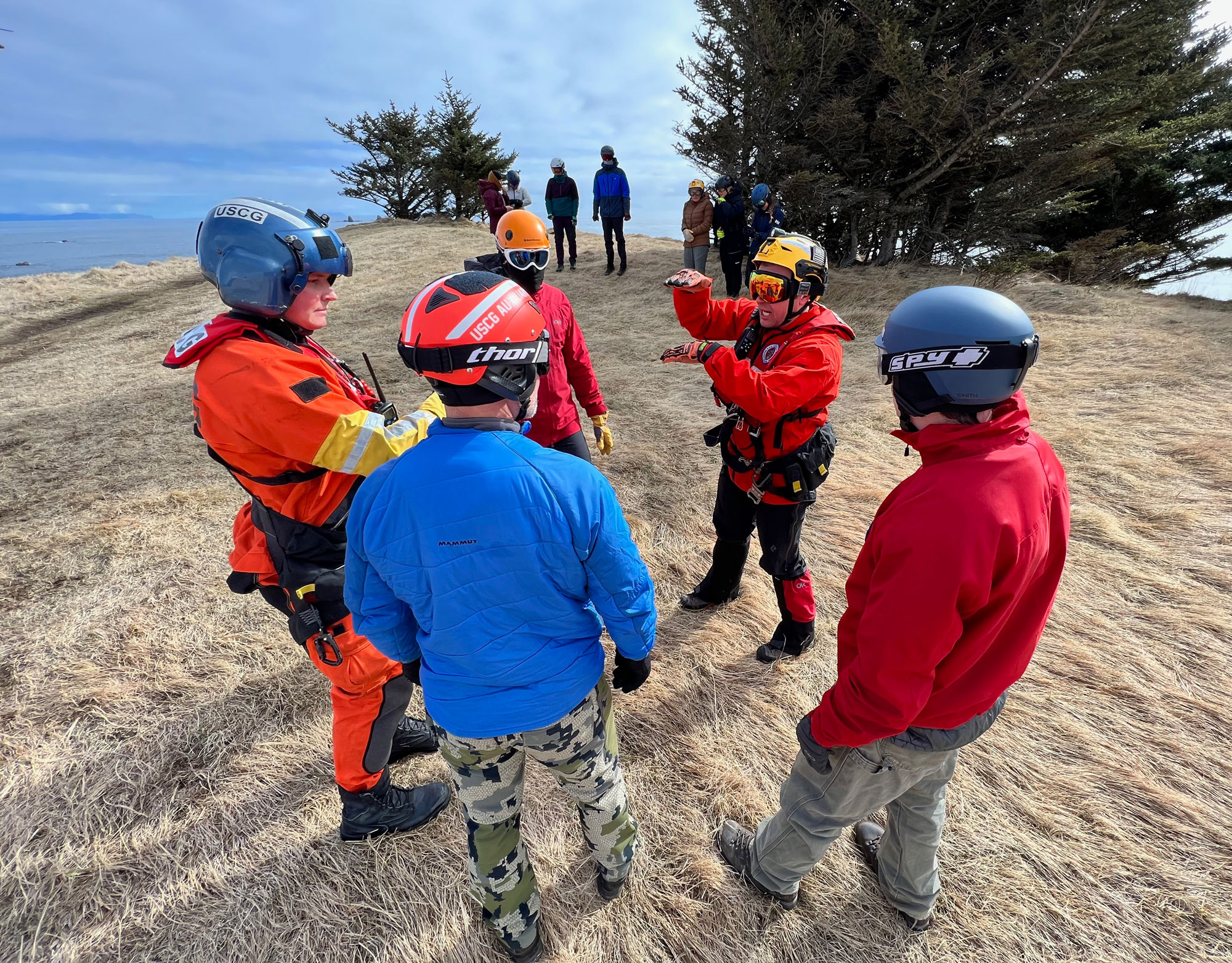
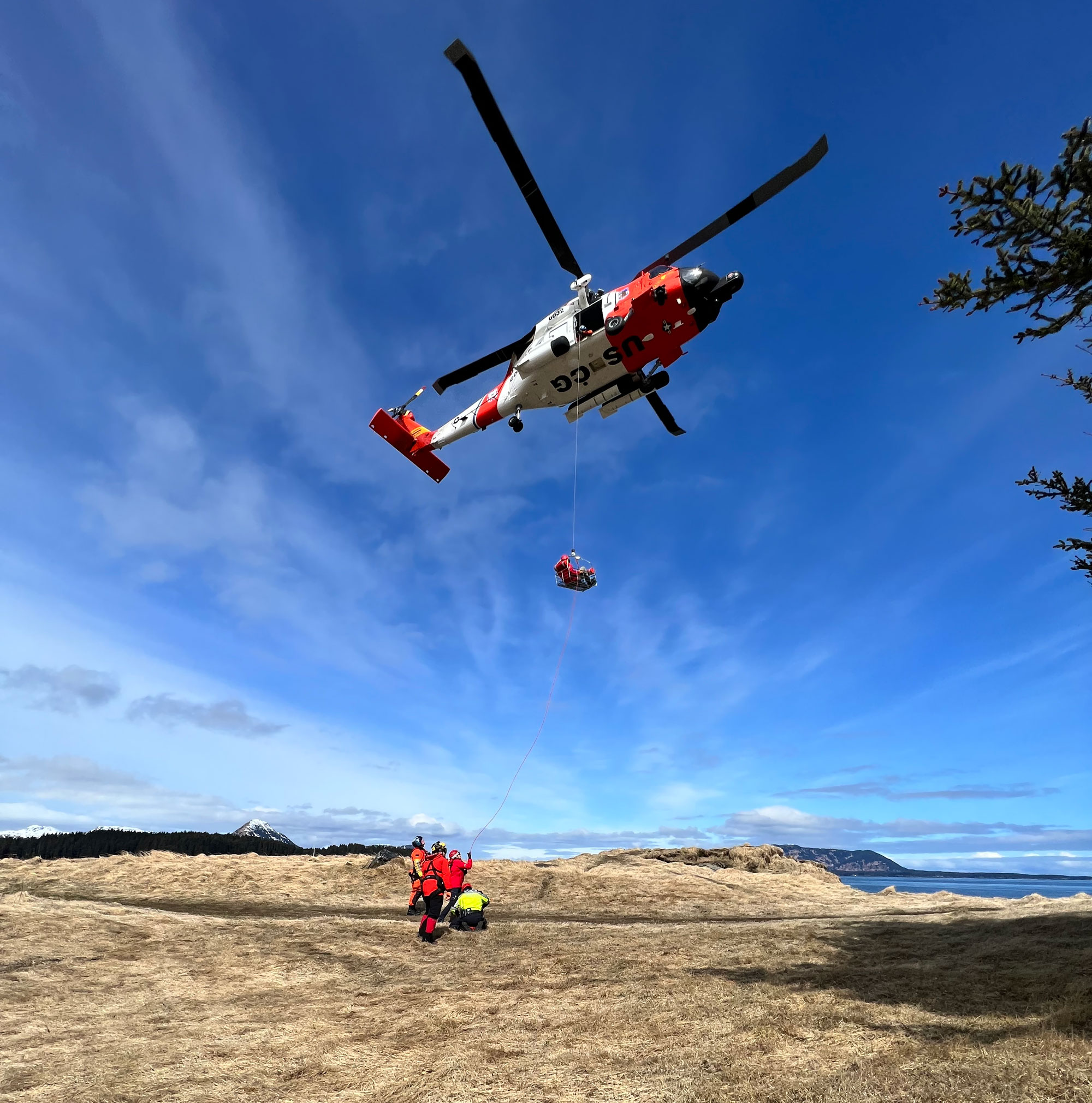
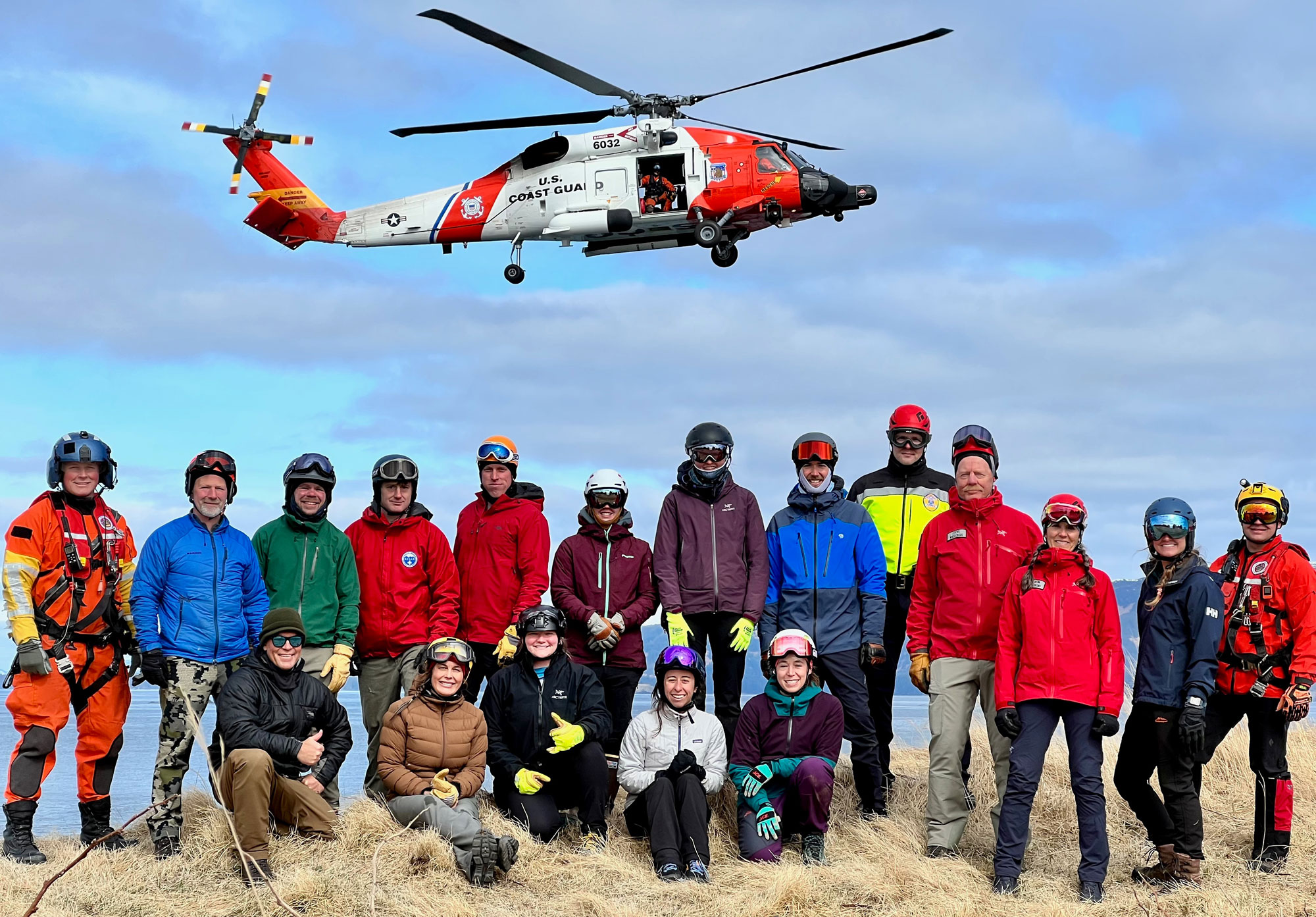
For KISAR’s April training we teamed up with the USCG Air Station to practice basket hoists, trail line tending, and helicopter ingress/egress. The air crew was very generous with their time and it was a fun training. Familiarizing KISAR members with working under a machine like an MH-60 Jayhawk is an important component of deployments and SAR missions when we coordinate with the USCG.





















 Kodiak Island Search & Rescue